

Craftsmanship and digital design are often presented as opposites. One is associated with the hand, the other with the screen. One with tacit knowledge, the other with precision and automation. But at CETEM, the CRAEFT Design experiment showed that these worlds do not have to compete. In fact, when used thoughtfully, they can strengthen each other.
The experiment explored how CAD modelling, FDM 3D printing, and CNC machining could support the traditional woodcarving process, not by replacing the artisan, but by helping designers and woodcarvers communicate more clearly and work with greater precision.
Reducing the gap between designer and artisan
One of the starting points of the experiment was a simple but important challenge: in woodcarving, complex ideas are not always easy to communicate from designer to maker. A sketch or digital model may suggest a form, but certain volumes, curves, and proportions remain difficult to interpret until they take physical shape.
To address this, CETEM worked with furniture designer Florian Moreno and woodcarver Francisco Sánchez. The process began with interviews and discussions about the problems of integrating carving into contemporary furniture design. From the designer’s point of view, woodcarving can add great value, but it also increases costs and often resists standardisation. This is precisely where 3D printing appeared as a useful resource: a way to create physical prototypes, validate forms, and detect issues before manual carving begins.
A workflow that connects technologies and craft
The experiment moved through several phases. First, a design was created using traditional sketching and then translated into a 3D CAD model. CETEM produced a physical prototype of the design using FDM 3D printing, prioritising speed and cost-efficiency over high-end finish, since the printed piece served mainly as a reference model.

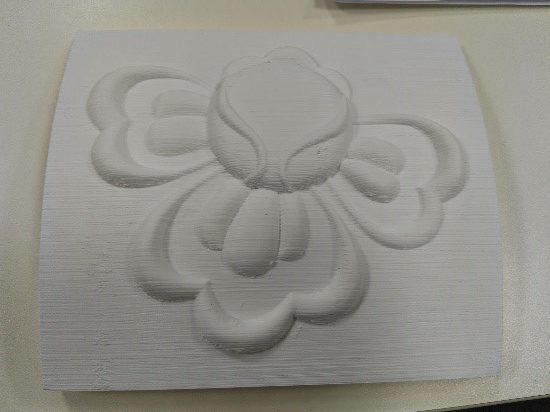
Figure 1. Physical prototype of the design and FDM 3D printing. ©CETEM
Then came a second layer of technological support: CNC machining. Based on the woodcarver’s feedback, CETEM prepared the wooden base so that the artisan could start from a shape already aligned with the intended design. This reduced the amount of rough manual shaping required and allowed the woodcarver to focus more directly on the refined, value-adding stages of the work.
Once the carving process began in Francisco Sánchez’s workshop, the 3D-printed prototype stayed visible on the workbench as a constant reference. The design was transferred onto the wood, depth was marked with the help of the printed model, and the carving proceeded with notable clarity and confidence. The final piece was described as highly faithful to the original design.

Figure 2. Woodcarving process of the piece. ©CETEM
Then came a second layer of technological support: CNC machining. Based on the woodcarver’s feedback, CETEM prepared the wooden base so that the artisan could start from a shape already aligned with the intended design. This reduced the amount of rough manual shaping required and allowed the woodcarver to focus more directly on the refined, value-adding stages of the work.
Once the carving process began in Francisco Sánchez’s workshop, the 3D-printed prototype stayed visible on the workbench as a constant reference. The design was transferred onto the wood, depth was marked with the help of the printed model, and the carving proceeded with notable clarity and confidence. The final piece was described as highly faithful to the original design.
Technology as support, not substitution
What makes this experiment especially interesting is that it does not present digitalisation as a shortcut around craftsmanship. Quite the opposite. CETEM’s evaluation confirmed that although digital tools improved communication, reduced ambiguity, and helped validate the design before carving, there remained an “interpretive zone” that only the artisan could resolve. Certain aesthetic nuances and surface decisions could not be fully predefined through software or prototypes. They depended on experience, judgment, and the intelligence of the hand.

Figure 3. Comparison of 3D printing and woodcarved pieces. ©CETEM
This is probably the strongest lesson. The goal is not to flatten craftsmanship into a predictable industrial process. It is to create a better dialogue between digital workflows and artisanal expertise, so that each contributes what it does best.
Figure 3. Video showing the process. ©CETEM
A model with broader potential
CETEM’s work suggests a practical route for furniture companies, designers, and craftspeople who want to integrate carving into contemporary product development without losing quality or authenticity. The methodology tested is replicable. It can support training, reduce costly misunderstandings, and make complex carved components more feasible in design-led production.
At the same time, it opens an educational opportunity. CAD files, 3D-printed models, and documentation of the process can all become teaching resources for future designers and artisans. This matters because preserving a craft is not only about protecting old techniques. It is also about enabling new forms of collaboration around them.
Topics for discussion
- How can hybrid learning models strengthen the transmission of traditional craft skills?
- Which elements of woodcarving can be effectively taught online, and which still require direct supervision?
- How can vocational training centres make traditional crafts more attractive to new learners?
- What does CETEM’s experiment suggest about the future of digital support in heritage-based education?