
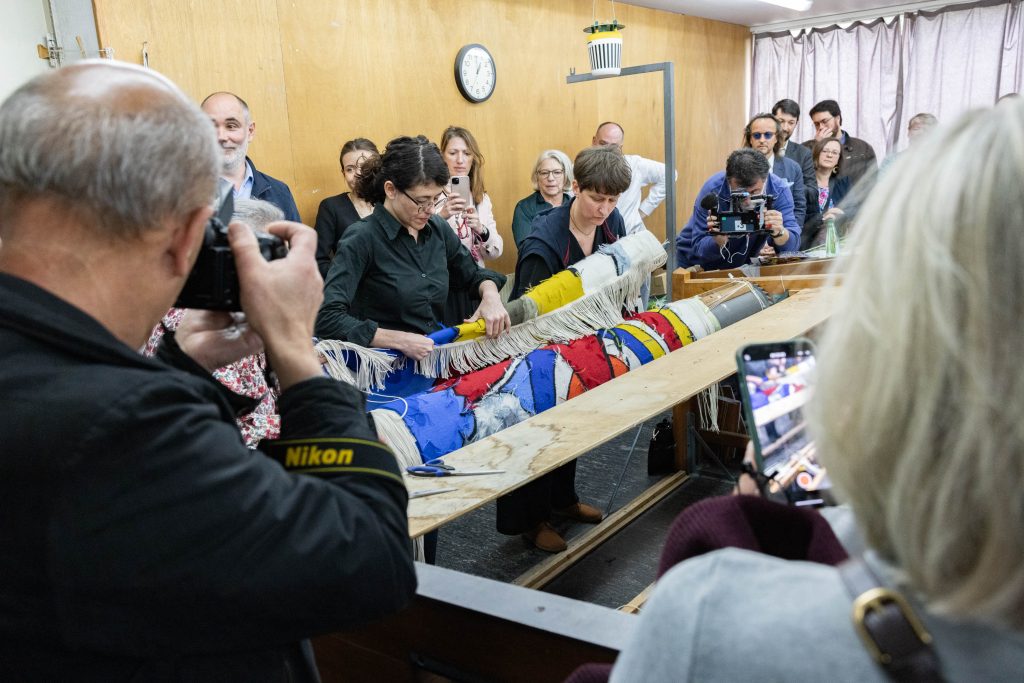
The Aubusson textile industry, centred on the towns of Aubusson and Felletin in France’s Creuse region, owes its success and distinctiveness to a dense network of know-how concentrated in this small territory, where intricate crafts complement one another in the making and preservation of tapestries. This collaborative mindset fosters a favourable working environment—one that stimulates growth and innovation while safeguarding centuries-old skills.
The Aubusson area supports three manufactories, along with nine independent master weavers, three cartoon (paper-template) designers, and three artisanal to semi-industrial dye workshops. Dialogue between these professionals and the artists whose works are to be woven is essential: the tapestry medium requires stylistic and technical choices to “translate” and adapt artworks into textiles in line with the artist’s intentions. Cartoon painters create the templates that guide the weavers, while dyers reproduce on wool the hues sought by weavers and artists, working by hand and relying on their expertise to achieve the desired colours.
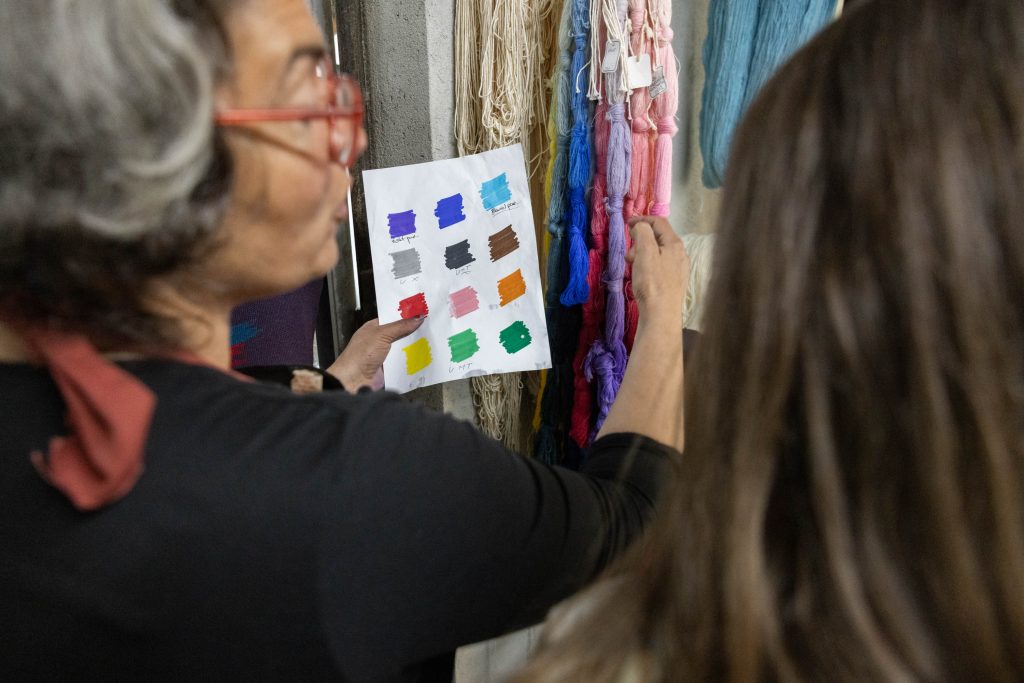
Dialogue between a weaver, a dyer, and a designer (cartoon creator) as they decide on the colour palette for an Aubusson tapestry. The scene includes colour samples, dyed wool threads, and a tapestry design sketch (cartoon). The designer points to parts of the drawing, while the weaver and dyer compare yarn shades, creating a sense of collaboration and artistic decision-making. ©Thierry Caron
Other actors at each end of the broader value chain are also involved. Upstream, the wool sector supplies the raw material: sheep farmers, shearers and sorters collaborate to provide different types and qualities of wool. Various processes then transform the fibres into yarns suitable for weaving. Two spinning mills operate in the Creuse département: the Fonty mill in Rougnat and the Terrade mill in Felletin.
Downstream, restoration and conservation specialists safeguard Aubusson’s textile heritage. By preventing damage, stabilising fragile works and restoring tapestries, they ensure the pieces endure over time. The Mobilier national restoration workshop is one of the last two public tapestry-restoration workshops in France.
This is Aubusson’s distinctive strength: by nurturing a network of resources and expertise, the tapestry ecosystem enables all professionals to work together to promote the craft and expand its visibility.
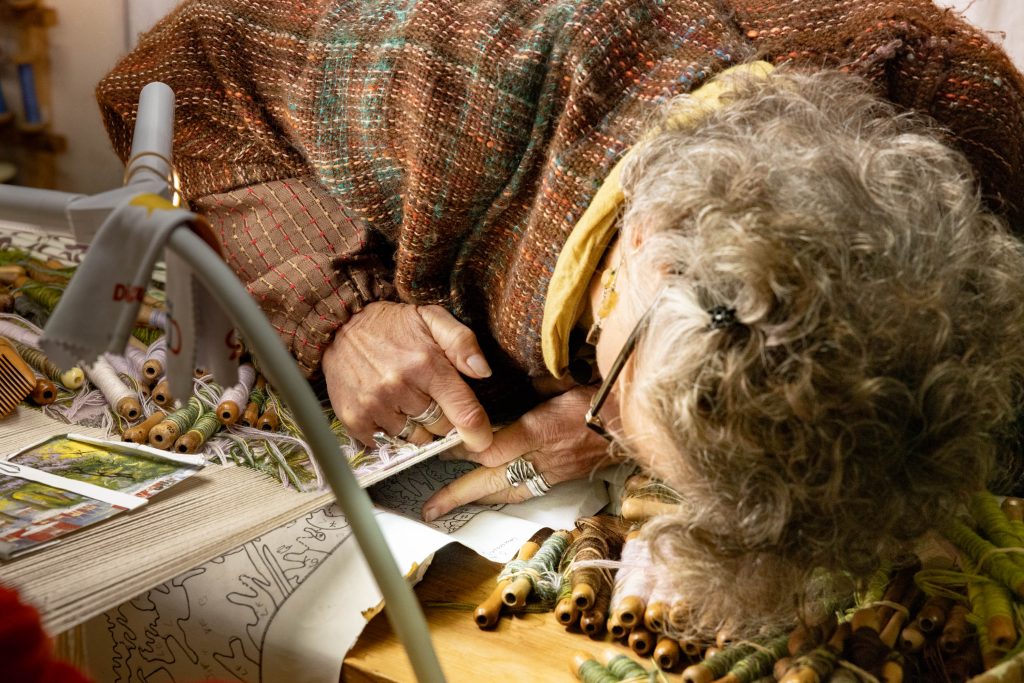
An image showing an Aubusson weaver setting up the cartoon before weaving. The tapestry design, or cartoon, is positioned behind or beneath the warp threads on the loom, serving as a guide for the weaver. The scene shows careful alignment and adjustment of the cartoon to ensure weaving accuracy. ©Thierry Caron
Bibliography
The Cité internationale de la tapisserie in Aubusson. New Presentation, Aubusson, Cité internationale de la tapisserie, 2021.
Fadat, Jacques, La Tapisserie d’Aubusson – The Aubusson Tapestry, Parthenay, Imprimerie Géhan, 1992.