
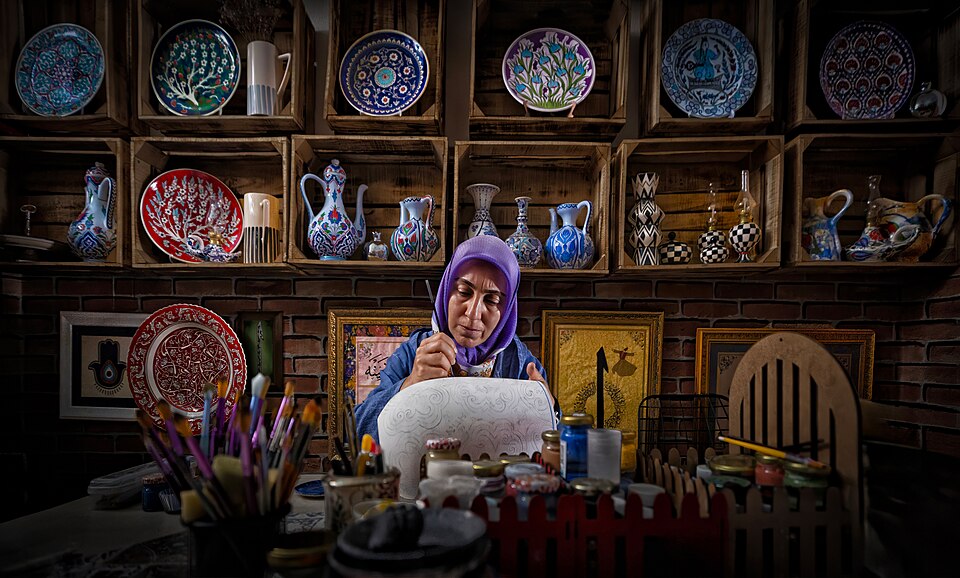
Çini are traditional, handmade glazed tiles and ceramics made in Turkey, featuring colourful motifs of plants, animals, and geometric patterns. These tiles are often seen on building facades and in homes throughout the country, adding vibrant beauty to everyday life.
Çini-making, the art of creating these decorative pieces, has deep roots in Turkish culture, especially in regions like İznik and Kütahya. For centuries, Çini tiles have been used to adorn mosques, palaces, and homes, showcasing both artistic skill and cultural identity.
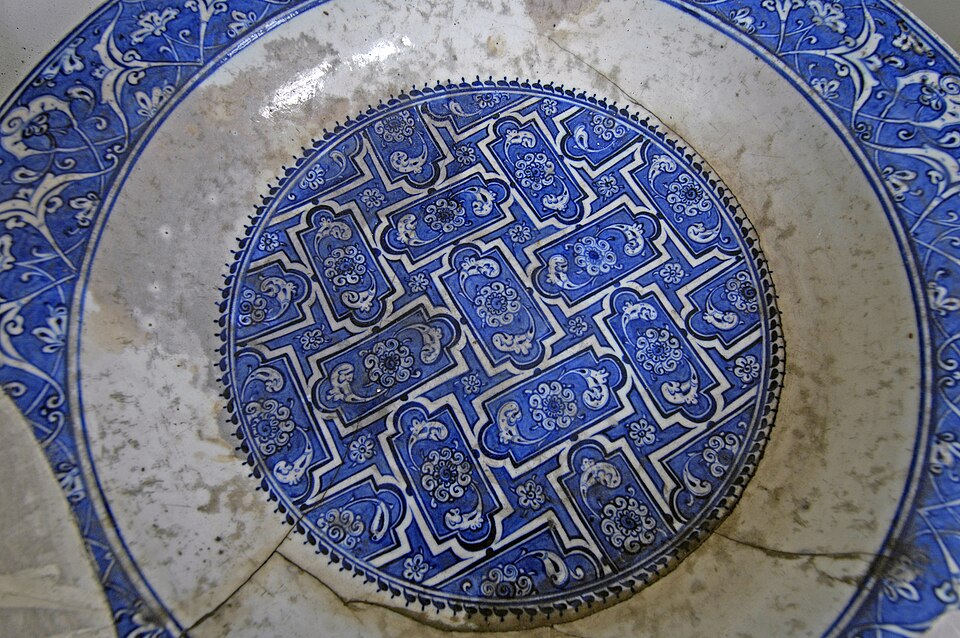
Nurhan Atasoy & Julian Raby: Iznik, The Pottery of Ottoman Turkey, 1994 edition (2006, December 16). Photo by: Dosseman. Available at: https://tinyurl.com/9k8fbe9w
Materials and Techniques
The process starts with a special clay made from quartz. Artisans shape the clay, fire it at high temperatures, and then hand-paint the designs using natural pigments. These colourful patterns are sealed with a final firing, giving the tiles their long-lasting shine and brilliance.
A Key Element of Ottoman Art
Çini tiles have been a major part of Ottoman architecture, decorating the interiors and exteriors of many historic buildings. Beyond their decorative function, they reflect the artistic vision and cultural values of the era.
Passing Down the Tradition
The knowledge and techniques of Çini-making are passed on through:
- Apprenticeships: Since the 14th century, young artisans have learned from masters (ustas) in workshops, following a traditional, hands-on teaching method.
- Modern Education: Today, Çini art is also taught in public education centres and vocational schools across Turkey. These courses cover both basic skills and advanced restoration techniques.
Why UNESCO Recognition Matters
Çini-making is listed on UNESCO’s Representative List of the Intangible Cultural Heritage of Humanity. This recognition:
- Helps protect and promote the tradition globally
- Encourages both respect for traditional methods and freedom to explore new styles
- Offers artists opportunities to showcase their work internationally
Çini-making is a proud part of Turkey’s cultural heritage. It connects the past with the present through beauty, skill, and meaning. Thanks to both local efforts and UNESCO recognition, this craft continues to live, teaching and inspiring new generations, and sharing Turkish creativity with the world.



2 responses
First... Read More