
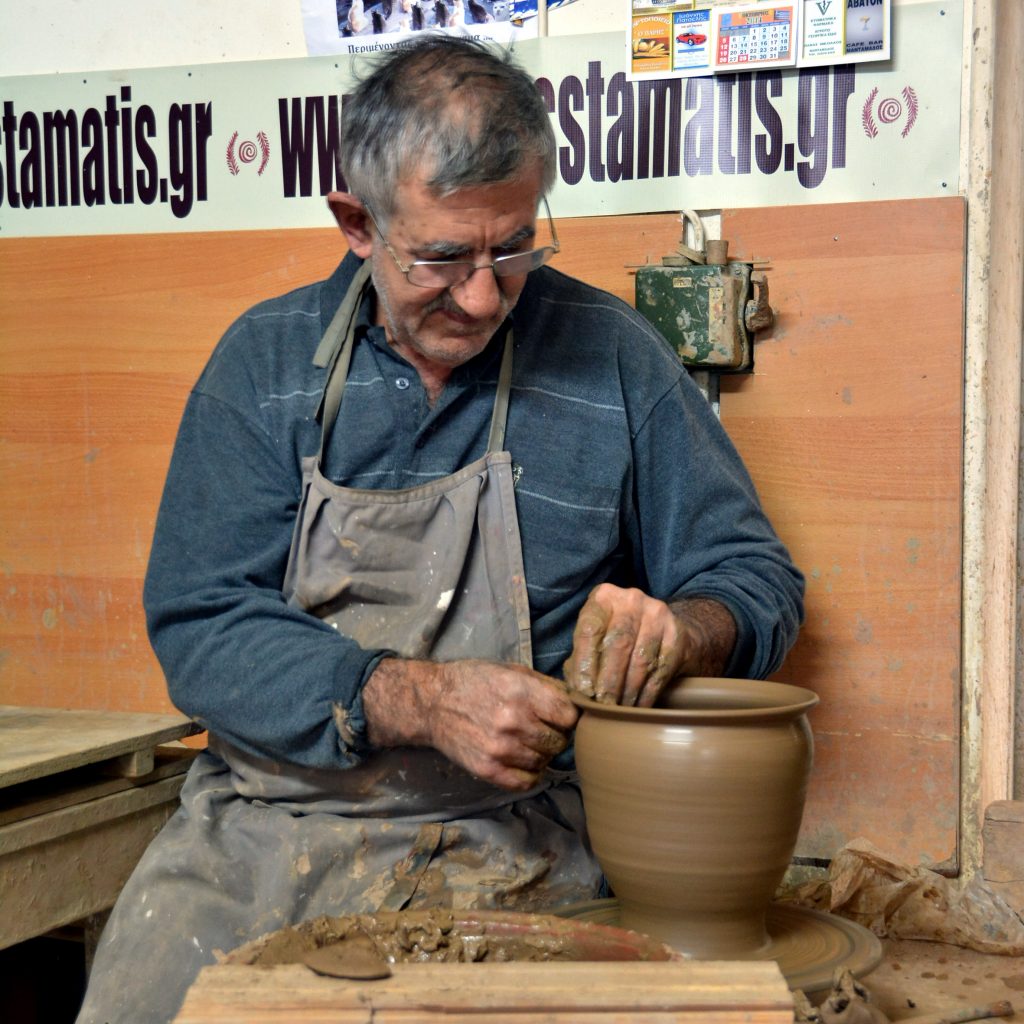
The ceramic tradition of Lesvos Island in Greece stretches back over 5,000 years, with early traces found in the prehistoric settlement of Loutropoli Thermi. That long history still lives on today in the village of Mantamados, where potter Stelios Stamatis continues his family’s craft in the “Workshop Pottery and Folk Art.”
Stelios was born in Mantamados and comes from a long line of clay potters. His great-grandfathers were already working with clay before the 1880s, followed by his grandfather and father. Pottery wasn’t just a job, it was a way of life, passed down from one generation to the next. Stelios grew up in the workshop, helping his father Efstratios Stamatis from a very young age. Before he was old enough for school, he was already carrying water, gathering branches for the kiln, and preparing clay. By the age of ten, he had started learning how to use the traditional foot-powered wheel.

©Stelios Stamatis. Stamatis family, with the Stelios Stamatis as a child (1956)
Times were tough, and Stelios had to leave school after primary education to help full-time in the family workshop. Alongside his father, he shaped traditional clay pitchers and cooking pots, which his mother finished with lime and hand-painted decoration. When his father died in 1975, Stelios took on the responsibility of keeping the workshop going. A few years later, in 1978, he brought in an electric kiln and new tools, making it easier to produce pottery without abandoning the traditional forms.
Symbolism of the Shape
What is unique about Stelios’s work is how closely his creations are linked to the traditions and customs of the Lesvos island. His pieces are not just decorative, but they carry meaning and identity.

©Stelios Stamatis.
“Koumari tou gamou” (wedding jug)
This jug full of water was curried into the church by two children, a boy and a girl with both their parents still alive, while the bride was walking in for the ceremony. They would place it, full of water under the Gospel, where it would remain throughout the ceremony to remind of the miracle in Kana, where God turned water into wine. After the end of the wedding ceremony, the couple had to take it home and drink from it for 40 days. The large handle symbolized the groom and the bride, the small one the babies that were to come, and the horseshoe was for good luck.
©Stelios Stamatis.
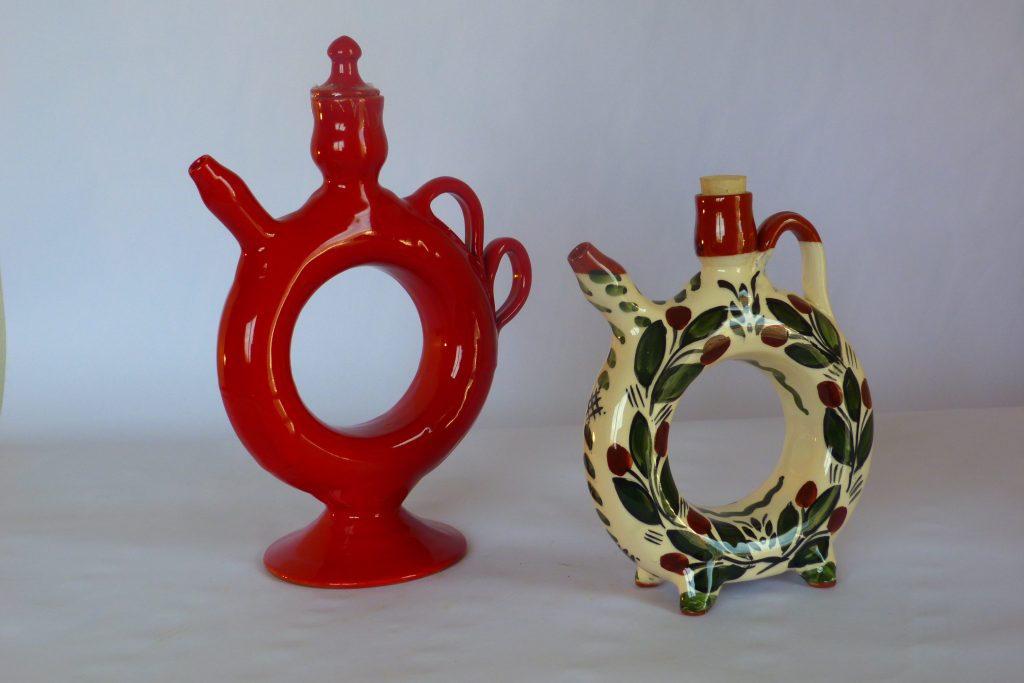
“Stefani” (wreath)
The wreath gets its name from its circular shape. It was traditionally filled with ouzo, cognac, or raki and offered to horsemen returning from festivals, especially the festival of St. Charalambos. Because of its shape, it was practical to use, one horseman would take the wreath, raise it, offer a toast to the housewife, and take a drink. Then he would pass it on to the next rider, until the entire group had shared the drink and offered their good wishes.

©Stelios Stamatis.
“Stefani-Kiropigio” (wreath-candlestick)
The wreath-candlestick was filled with ouzo and placed on the wedding table. The candlesticks symbolized the parents and the couple, while its circular shape represents the circle of life.
©Stelios Stamatis.
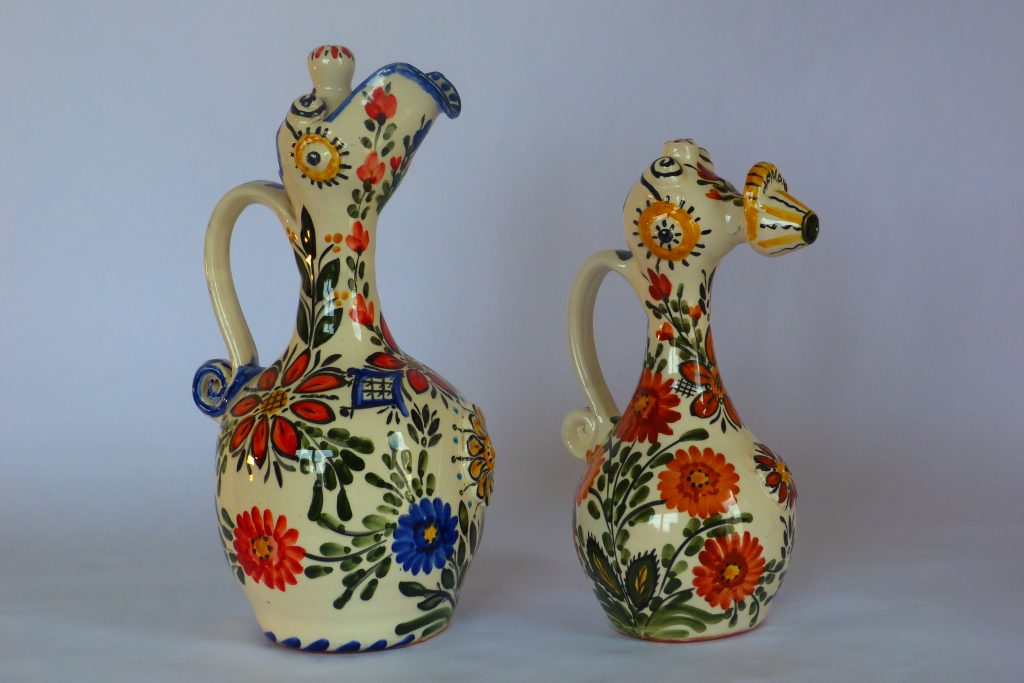
“Chimomouri”
The “Chimomouri” is a vessel traditionally used during christening ceremonies. When a baptism took place, hot water was carried from nearby homes in this pot. Its clay material was ideal for keeping the water warm for longer periods.