
Topics for discussion:
- How can ego-centric recordings contribute to the preservation and transmission of craft knowledge?
- Do these perspectives help make complex gestures more understandable for apprentices or enthusiasts?
- What other craft skills or activities could benefit from such recordings?
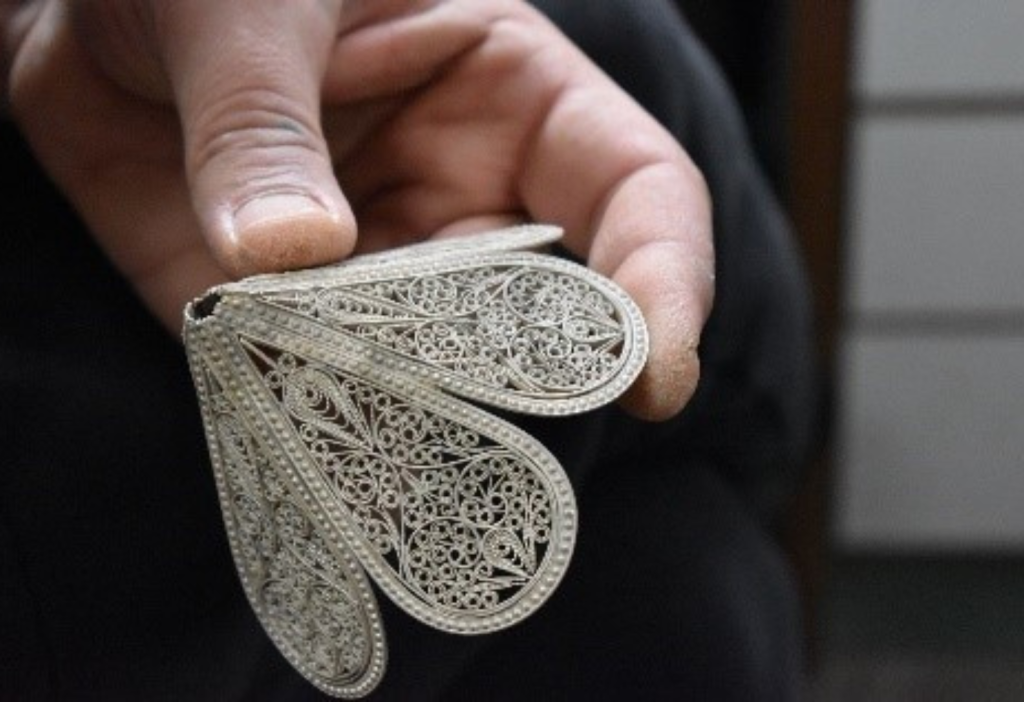
Silversmithing is the art of shaping silver into objects through techniques like hammering, casting, engraving, and soldering. Traditionally, silversmiths have created jewelry, tableware, decorative items, and functional objects, with each piece reflecting the skill and legacy of this intricate craft. As part of Craeft Protocol testing phase, we have implemented the Ethnographic Protocol in Ioannina, Greece, focusing on two traditional silversmithing techniques: filigree and sand-casting.
Historical Perspective
Greece’s silverworking history stretches back to ancient times, flourishing during the Ottoman period and witnessing revival with the reopening of the Lavrion mines in 1865. These mines, along with imports from America, renewed silver supplies and sustained craftsmanship. Techniques such as cupellation (Greek: lagarisma), a process for purifying noble metals, were passed down across generations. However, this method was time-consuming and often dangerous, requiring the expertise of itinerant craftsmen in rural areas. Today, most silversmiths use recycled silver or imported pure silver, continuing the tradition with sustainable practices while embracing modern methods.
Recording Craft Gestures through the Craeft Protocol
To document silversmithing gestures, we used ego-centric (first-person view) and exo-centric (third-person view) recording methods. Below are two videos showcasing these perspectives:
Ego-centric recording of sand casting gestures
©Gavriela Senteri, ARMINES (2024). Third-person view of sand casting technique.
Comparison of ego-centric and exo-centric recordings of the sand casting gestures
©Gavriela Senteri, ARMINES (2024). Third-person and first-person views of the same sand casting gestures. Comparison of the views.
In everyday life, we are used to seeing first-person recordings in sports, cooking, or dancing. However, what happens when craftsmanship gestures are captured this way?
Transmission, Training, Self-improvement, and Certification
We invite you to share your thoughts and experiences on how to effectively pass craft skills to new generations. This includes exploring formal and non-formal education, hands-on learning, and digital formats such as VR, augmented reality, and hybrid approaches, while also working to develop meaningful certification models.
CRAEFT partners will share insights from project pilots in sectors like glass, wood, clay, textiles, and metalworking, focusing on innovative ways to revitalize endangered skills.
Our aim is to engage policymakers and craftspeople in creating opportunities for skill transmission based on best practices and to develop new certification pathways. We encourage you to contribute your recommendations and experiences, helping shape the future of craft education and skill preservation. Join the discussion and enrich this vital topic with your insights!


3 responses
I wasn’t present for all the ego-centric recordings, but I was there for some and also gathered feedback from those I missed. Overall, mos... Read More
A very interesting protocol that I was able to participate in.