
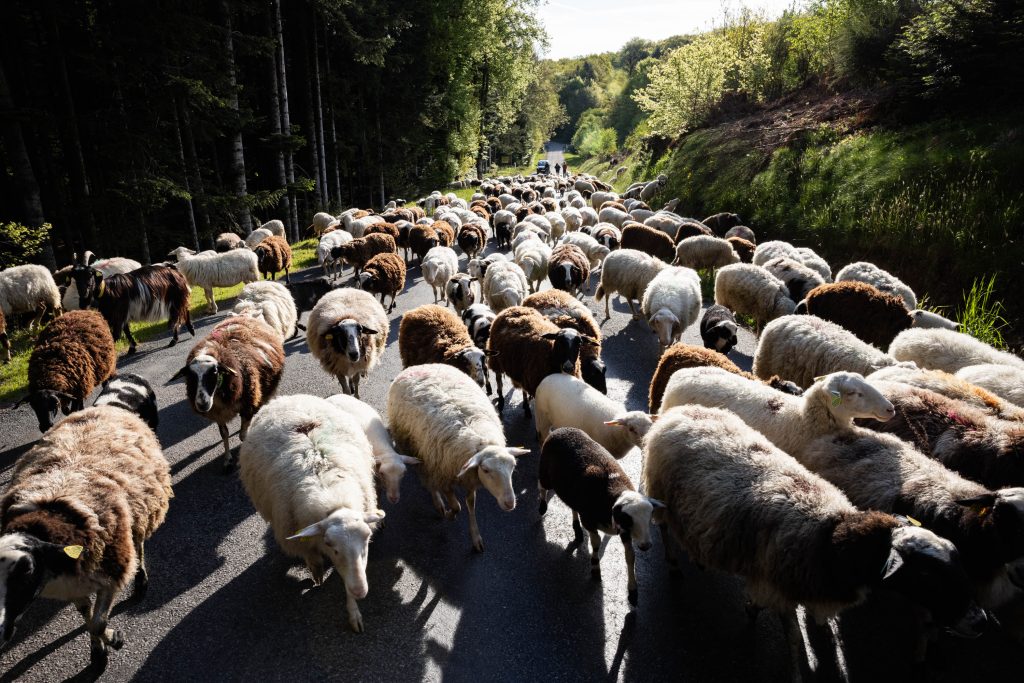
The wool industry in France’s Creuse region is vital to the Aubusson tapestry manufactories and workshops, supplying the raw material that weavers need to create their pieces. While farmers provide the raw wool fibres, a series of subsequent processes transforms them into yarns suitable for weaving, resulting in a complex production chain that draws on many professional skills.
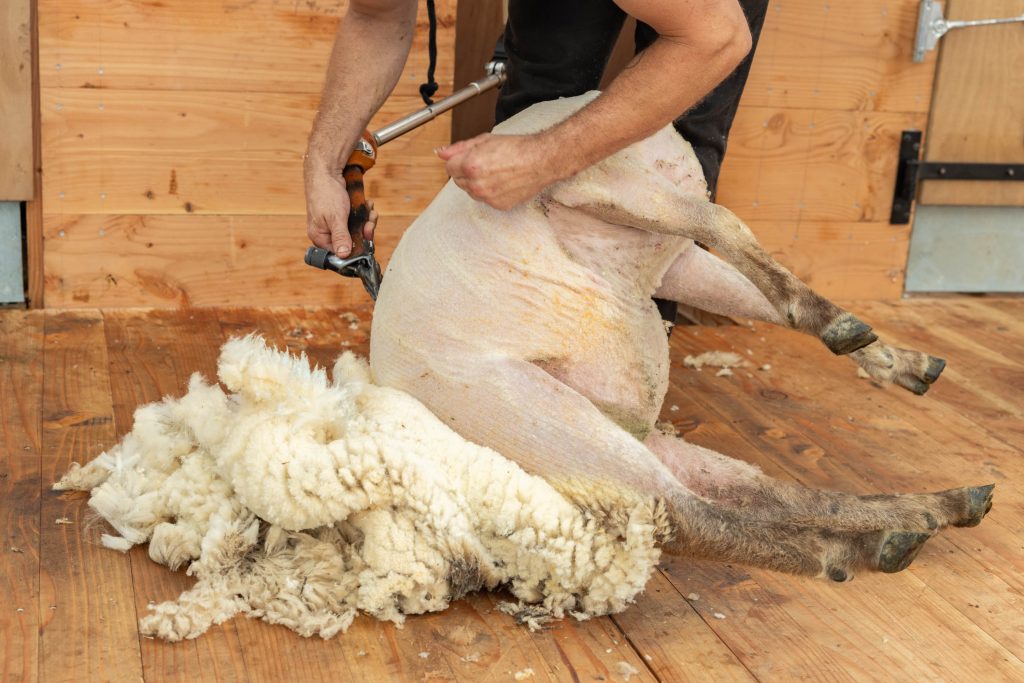
Sheep shearing. Removing wool fleece from a sheep. removing the wool fleece from a sheep. removing the wool fleece from a sheep. ©Thierry Caron
Once the fleeces have been removed from the sheep, the wool is sorted by quality according to breed (and thus fibre fineness) and fibre length. The wool is then washed before spinning—a stage in which the fibres, after being disentangled, are twisted together to form yarn.
Two spinning mills remain active in the Creuse département: the Fonty mill in Rougnat and the Terrade mill in Felletin. They select the most suitable wools and produce durable, hard-wearing yarns used for tapestry weaving.
Dyeing is another essential part of preparation. Aubusson dyers can reproduce on wool the exact hues sought by weavers and artists. Drawing on precise expertise, they hand-create specific, often unique tints using only primary-colour powders. The wool is immersed in large dye baths for a set time so that the colour is fully absorbed into the fibres. Corrections are often necessary, with the dyer adjusting their work according to the colour obtained after the baths. Some dyers also use plant-based dyes.
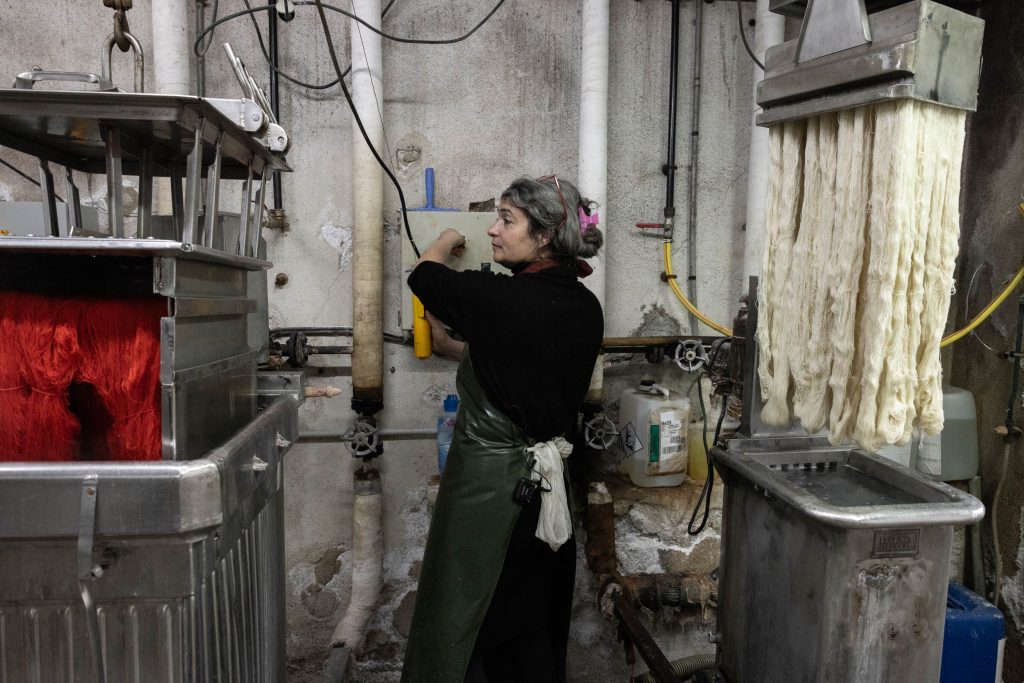
Wool dying. An image showing wool being immersed in large dye baths, with colours soaking into the fibres as the wool absorbs the dye. ©Thierry Caron
Founded in 2009 and based in Felletin, the Lainamac association supports the wool industries of the Creuse and the wider Massif Central by promoting know-how and strengthening local markets. In doing so, it raises the sector’s visibility and contributes to its economic development. As the sector’s sustainability is one of Lainamac’s main objectives, its training centre is dedicated to transmitting skills and preparing apprentices and future wool craftspeople. Innovation is likewise central to its approach, with various programmes and projects launched, and the association undertakes promotion at trade fairs and other events where professionals are showcased.
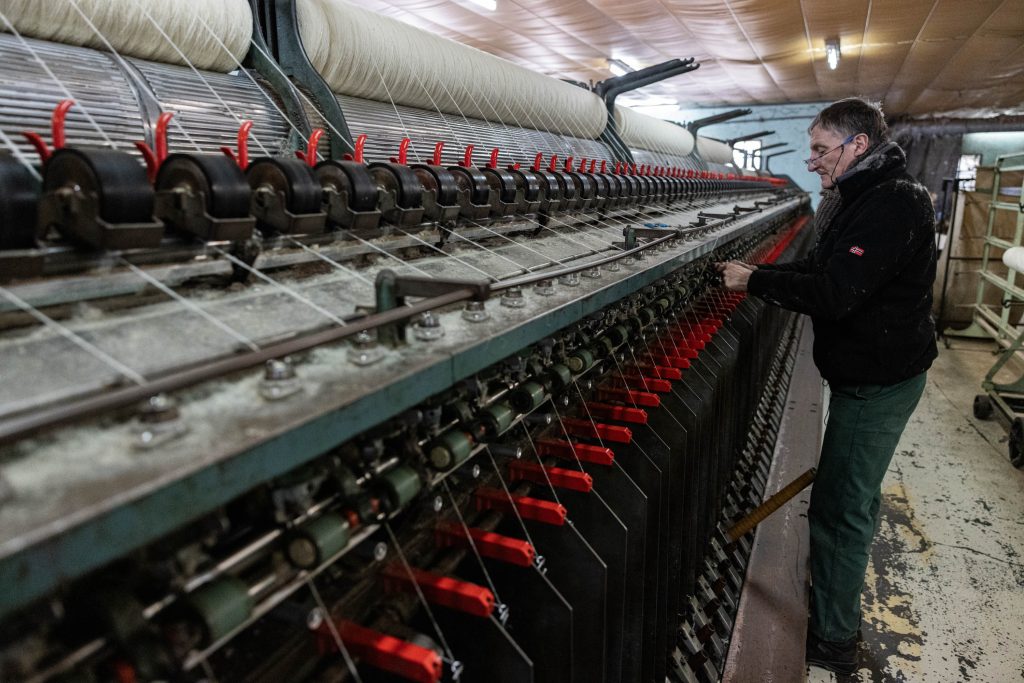
An image showing wool being spun into yarn on a spinning machine. ©Thierry Caron