
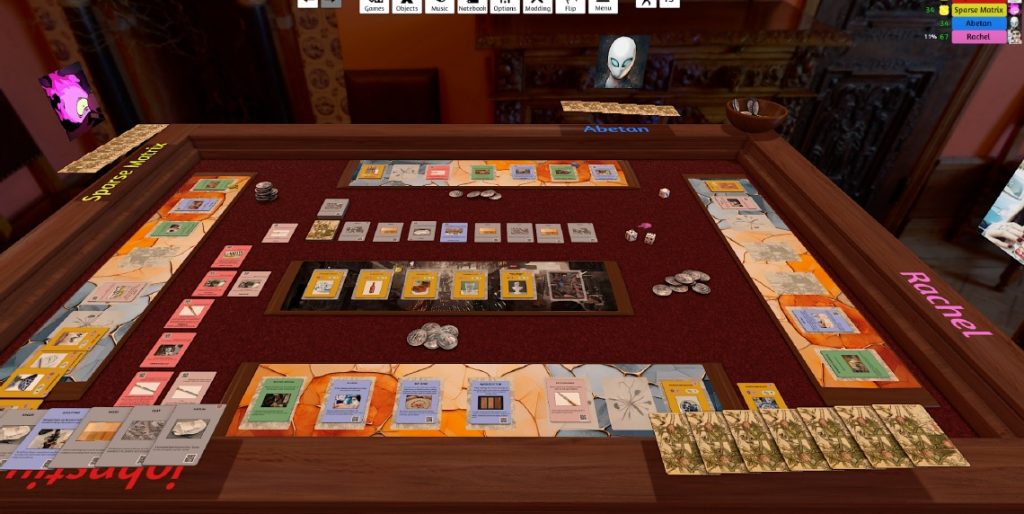
The ‘Crafts’ Board Game, developed by Ioannis Stivaktakis under the supervision of Xenophon Zabulis at the University of Crete, Greece, is an educational board game centered around traditional crafting arts. The idea was initiated by the student’s passion for role-playing board games and the needs of Craeft’s Valorisation pilot which PIOP leads. ‘Crafts’ incorporates elements such as resource management, dice-based crafting checks, and a central ‘Market’ system. Players take on the role of artisans, using material cards, dice rolls, and tool upgrades to create intricate objects from raw materials like Sand, Kaolin, Clay, Wood, and Marble. The game aims to balance strategic depth with accessibility and is freely available on GitHub and Steam’s Tabletop Simulator, encouraging contributions and widespread play (see links at the end of the article).
Drawing resources from Craeft’s Authoring Platform, the game includes crafts like glass blowing, clay and porcelain crafting, wood carving, and marble carving, chosen for their cultural significance and unique techniques. Players must manage resources and risks to meet the demands of potential buyers, represented by Seller cards. The game mechanics involve various cards: Material, Tool, Upgrade, and Seller cards, each playing a distinct role in the crafting process.
Gameplay consists of several phases per turn: Material Gathering, Crafting, and Selling. In the Material Gathering phase, players collect Material Cards. During the Crafting Phase, players attempt to create items based on Seller card requirements, with success determined by dice rolls that can be influenced by Upgrade cards. Successful crafting earns gold, while failures may require repairs. In the Selling Phase, completed items are sold to Sellers, earning gold and victory points.
Overall, the game intricately simulates the artisan experience, capturing the balance between skill, effort, and fortune, and encouraging players to master their tools and resources to achieve success and reputation as master craftsmen.
Topics for discussion:
- How can gamification strategies be employed to engage communities in preserving traditional crafts as part of our cultural heritage, and what innovative approaches can make this preservation effort both educational and enjoyable for future generations?
- In what ways can gamification enhance apprenticeships and educational programs for traditional crafts, and how can game elements be integrated to motivate and assess the learning of crafting skills effectively?
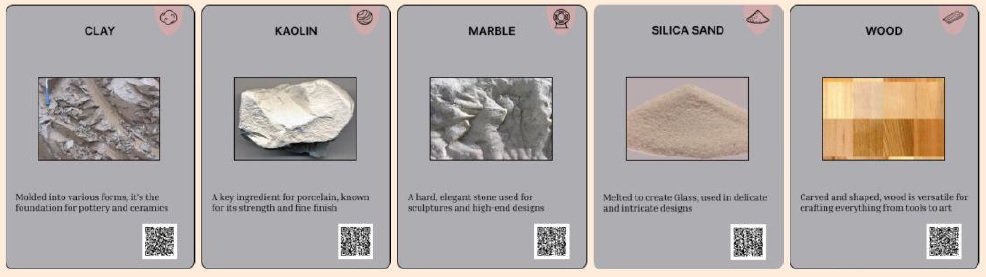
Material Cards: Materials used in the construction of items. ©Ioannis Stivaktakis
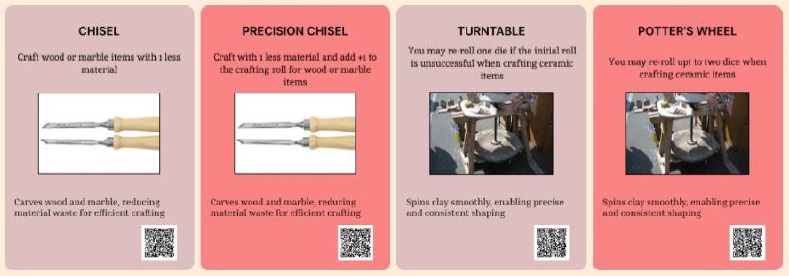
Tool Cards: Special tools players can buy and use during the crafting process. ©Ioannis Stivaktakis
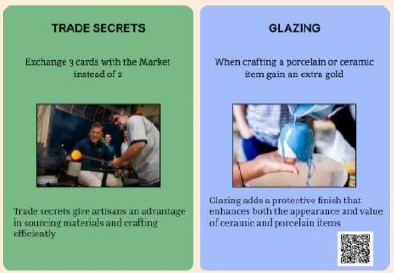
Upgrade Cards: Enhancements that represent advanced techniques or expertise. ©Ioannis Stivaktakis
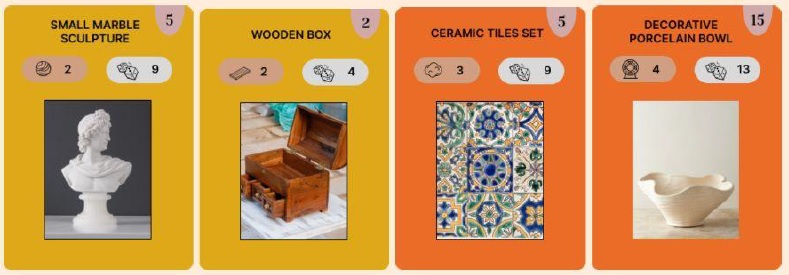
Seller Cards: Represent orders from seller, showing the requirements for each crafted item. ©Ioannis Stivaktakis