
Topics for discussion:
- How can standardised semantic data frameworks enhance cross-cultural understanding and appreciation of diverse craft traditions?
- What specific strategies can be implemented by smaller craft institutions or individual practitioners to adopt Linked Open Data standards without extensive resources?
- How might ethical considerations and cultural sensitivities be effectively managed when integrating craft data into open, interoperable digital frameworks?
The craft domain, characterised by its rich diversity of materials, techniques, and cultural expressions, faces significant challenges in data interoperability and collaboration. As craft practices increasingly intersect with digital platforms, the need for standardised data becomes critical to ensure accessibility, integration, and preservation of knowledge. Semantic web technologies and Linked Open Data (LOD) offer promising solutions to these challenges, facilitating greater collaboration, richer data integration, and improved discoverability across institutions, practitioners, and digital environments.
The Importance of Interoperability in Craft
Interoperability, the ability of diverse systems, platforms, and organisations to exchange, interpret, and meaningfully use information, is essential within the craft domain. Craft knowledge spans many institutions, from museums and archives to artisan workshops and educational bodies. Without interoperability, valuable craft data remains isolated, difficult to discover, and at risk of loss.
Adopting standardised data models enables the seamless integration of craft-related data sets, thereby fostering collaborations among craftspeople, scholars, and cultural institutions. It enhances not only research but also public engagement and educational outreach, ensuring a more comprehensive representation of craft traditions worldwide.
Semantic Web Technologies and Linked Open Data (LOD)
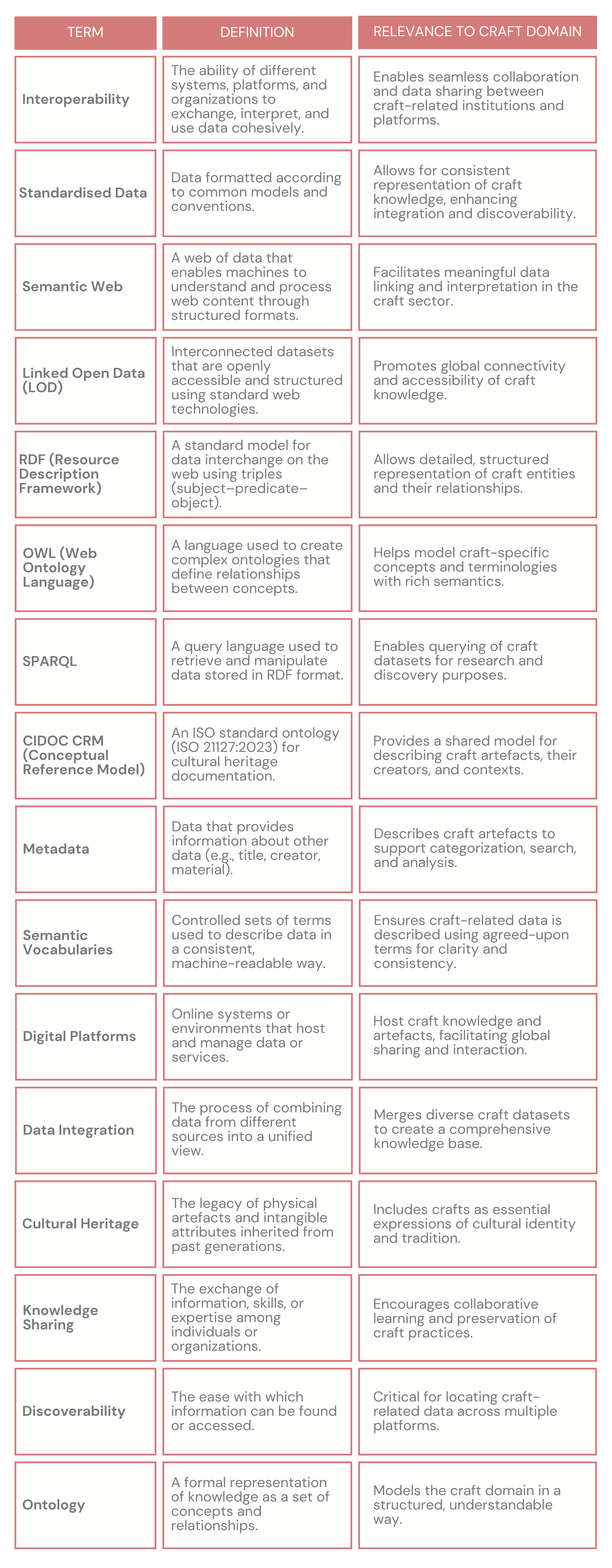
Semantic web technologies such as RDF (Resource Description Framework), OWL (Web Ontology Language), and SPARQL enable data to be represented in a structured and meaningful way, allowing machines and humans alike to understand context and relationships among craft data. LOD further enhances these capabilities by connecting data points across the web, thereby creating a web of interoperable, accessible, and reusable craft knowledge. Additionally, the reuse of models such as CIDOC CRM (Conceptual Reference Model), an ISO Standard (ISO 21127:2023), is particularly beneficial for interoperability applications.
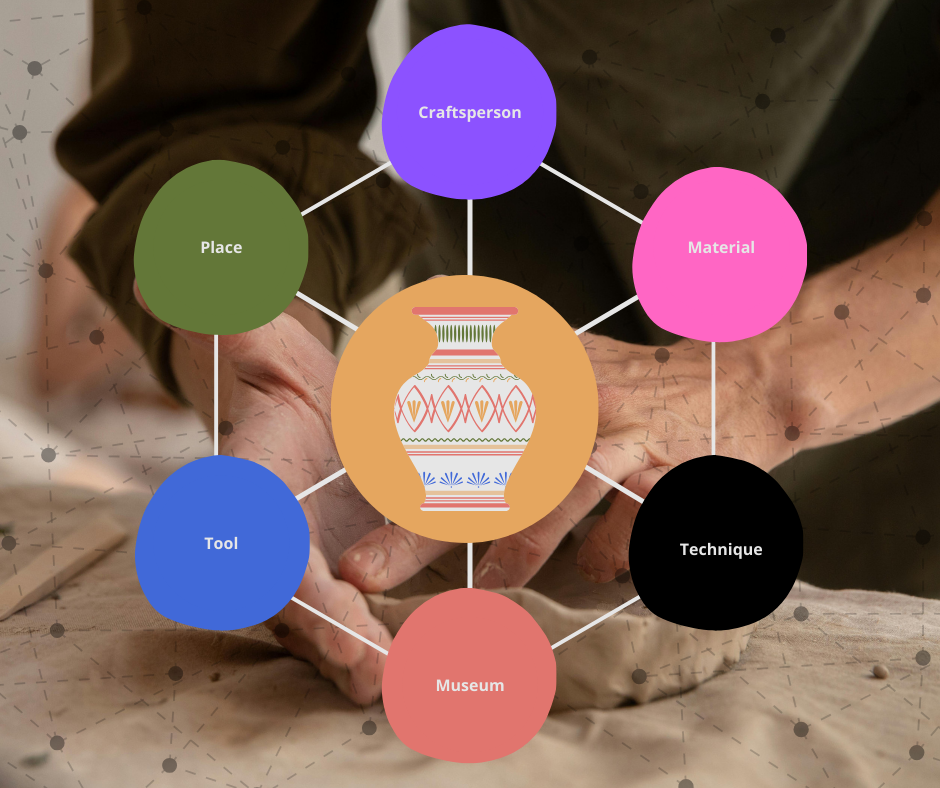
For instance, projects like the Europeana initiative employ Semantic Web technologies to aggregate and disseminate data about cultural heritage objects, including craftworks. Users can explore relationships between craftspeople, techniques, materials, and geographic locations, offering richer insights into the cultural narratives surrounding these artefacts.
Enhancing Collaboration and Discoverability
Craft institutions and practitioners can vastly improve collaboration and knowledge sharing by adopting LOD standards. For example, metadata about a ceramic artefact, standardised using semantic vocabularies, can be linked to similar artefacts in disparate collections worldwide. Practitioners can thus explore and understand global influences and variations, fueling innovation and creative practices.
Platforms leveraging semantic standards facilitate easier searchability, allowing practitioners and scholars to quickly discover detailed information, including historical context, material specifications, and production techniques. This discoverability encourages scholarly research, fosters creative collaborations, and enhances public accessibility to craft knowledge.
Challenges in Implementing Semantic Standards
Despite the clear advantages, adopting Semantic Web technologies in the craft domain faces several hurdles. These include:
- Complexity and Cost: Developing and maintaining semantic infrastructures requires substantial technical expertise and financial resources.
- Data Quality and Standardisation Issues: The diverse and often localised nature of craft knowledge makes standardisation challenging, potentially resulting in oversimplifications or misrepresentations.
- Cultural Sensitivities: Sharing culturally sensitive craft information openly may face ethical and cultural barriers, requiring careful navigation and stakeholder consultation.
Addressing these challenges requires coordinated efforts from international bodies, domain experts, and community stakeholders, alongside supportive policies and sustained investments.
Broader Cultural and Technological Implications
Embracing semantic standards and interoperability in craft has profound implications beyond mere technological advancement. It democratises access to cultural heritage, empowering communities globally to represent their crafts authentically and sustainably.
Technologically, it catalyses the development of more intelligent, interconnected digital platforms capable of supporting richer interactions and knowledge sharing. Culturally, it promotes a more inclusive global narrative, fostering greater appreciation and preservation of diverse craft traditions.
Conclusion
The integration of Semantic Web technologies and Linked Open Data within the craft domain represents an essential step toward a future where craft knowledge is accessible, discoverable, and sustainable. While challenges persist, the rewards—enhanced collaboration, enriched cultural narratives, and empowered global communities—are substantial. Institutions and practitioners embracing these standards today lay the groundwork for a vibrant, interconnected, and culturally rich future.
Dictionary
One Response
An extremely interesting article, thank you.