
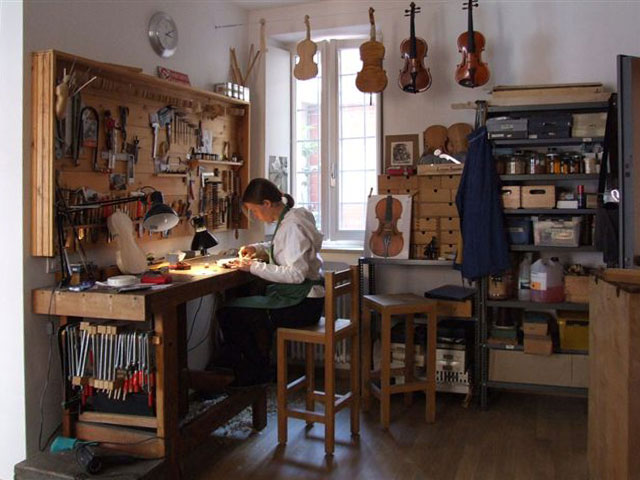
In the heart of northern Italy, the city of Cremona has long been synonymous with excellence in violin-making. For centuries, master luthiers like Antonio Stradivari and Giuseppe Guarneri set a standard that remains unmatched. Today, this tradition continues, with artisans still handcrafting violins using the same traditional techniques and natural materials such as spruce, maple, and custom-crafted varnishes.
In 2012, the Cremonese violin craftsmanship was inscribed to the UNESCO’s list of Intangible Cultural Heritage, which helped give it more visibility and support. Thanks to this, people from around the world now come to Cremona, students, musicians, makers, and tourists, to learn, create, and experience the craft up close.
The International School of Violin Making, founded in 1938, continues to attract students from around the world—many of whom decide to stay in Cremona to carry on the tradition. Learning goes far beyond the classroom. In small workshops across the city, experienced makers pass down their skills through close, hands-on mentorship.
What makes Cremona truly unique is how it combines different ways of learning: formal education at the school, traditional apprenticeships in local workshops, and informal sharing of knowledge through everyday conversations, collaboration, and direct work with musicians.
Today, the Cremonese tradition remains a dynamic and international community, shaped not only by heritage but also by the evolving needs of musicians, collectors, and cultural institutions. Yet, like many traditional crafts, despite its great social, cultural, and economic value, it also faces challenges from competition with mass-produced instruments to the pressure to adapt to changing markets.
Topics for discussion:
- What can inspire younger generations to learn the traditional crafts like violin-making today?
- What are the biggest barriers for young people wanting to enter the world of traditional violin-making? Is it cost, time, job opportunities or something else?
- What can other craft traditions learn from Cremona’s approach to combining formal education, apprenticeships, and informal knowledge-sharing?
- Do you know of similar transmission examples? Please do share.
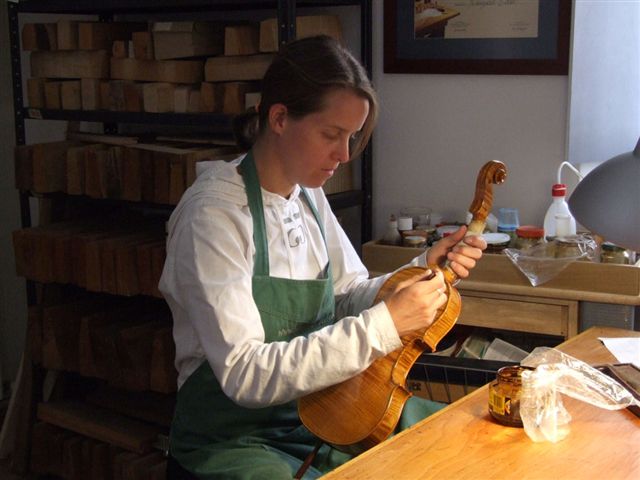
Varnishing a violin by Hildegard , Dodel, luthier in Cremona (2007, July). Photo by Hildegard Dodel. Available at: https://commons.wikimedia.org/wiki/File:Varnishing_a_violin.jpg
