
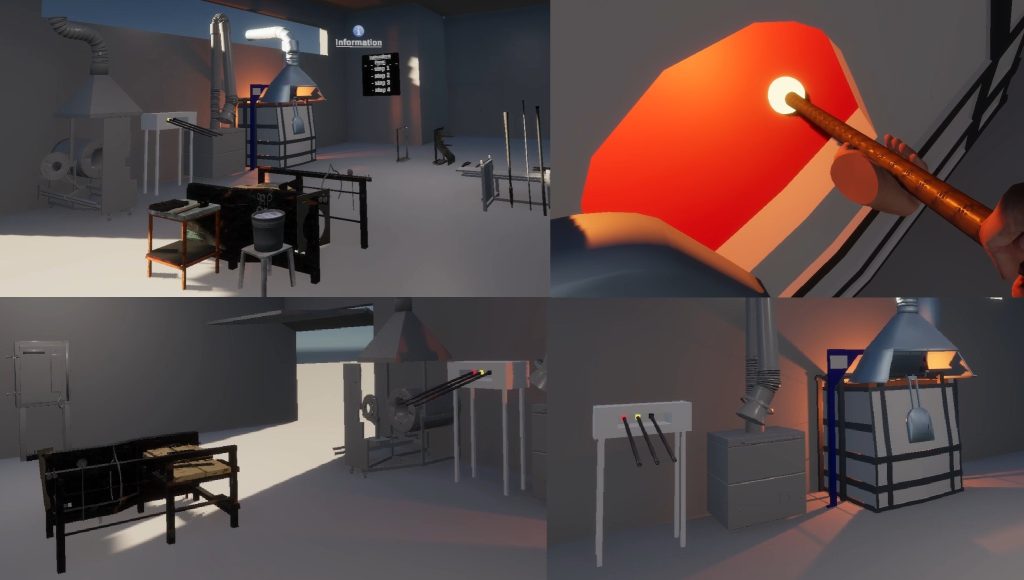
The VR Glassblowing Simulator is designed with two distinct scenarios to cater to different learning objectives. These scenarios, Knowledge Mode and Know-How Mode, provide an engaging and comprehensive educational experience. The project focuses on simulating the glassblowing process in a virtual environment, replicating traditional craft techniques with high precision and realism. Importantly, the application supports multiplayer functionality, enabling teachers and students to meet in VR and practice together, enhancing collaborative learning and instruction in real time.
Mode 1: Knowledge Mode
The Knowledge Mode is designed for informational exploration and tool familiarization. In this mode, users are able to navigate a virtual glassblowing studio, interact with tools, and learn about the equipment through text panels, 3D animations, and videos. Multiple users can join the session and engage with the materials, making it an excellent mode for group learning and collaborative exploration.
Key Features:
- Interactive Exploration: Users can hover over various tools, triggering information panels that provide detailed descriptions, as well as 3D animations or videos that showcase each tool’s functionality.
- Realistic Physics Simulations: The tools and equipment are programmed to behave in a manner similar to their real-world counterparts, offering an accurate understanding of their roles in the glassblowing process.
- User-Friendly Navigation: Participants use the left controller to teleport through the virtual space, making it easy to explore the studio and interact with different objects.
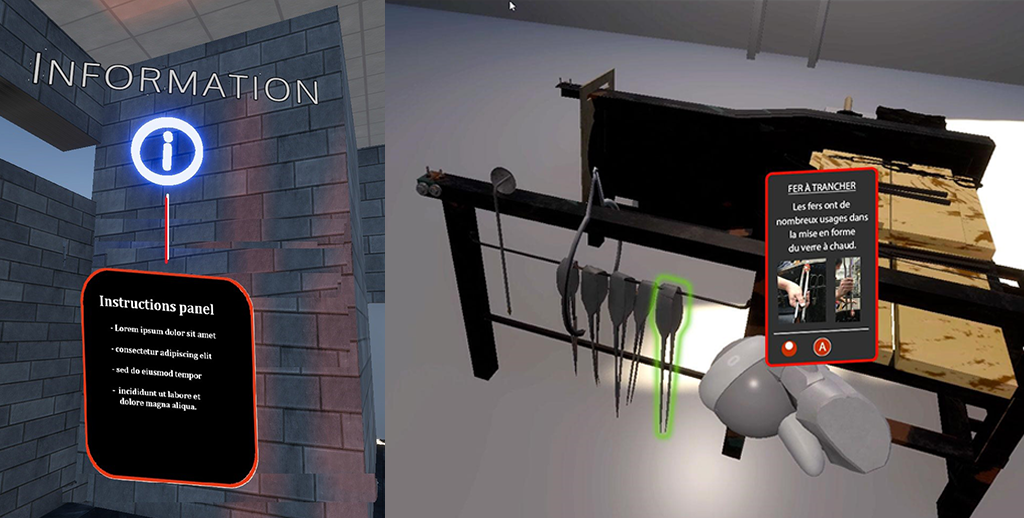
Glass Blowing Virtual Reality Workshop developed by Khora.
Mode 2: Know-How Mode
In contrast, Know-How Mode is a practical scenario focused on teaching specific glassblowing techniques. It allows users to perform tasks such as gathering glass, shaping it, blowing it into forms, and detaching pieces from the pipe. Each action is tracked and simulated with precision, offering a hands-on experience without the risks or material costs of traditional glassblowing.
Key Features:
- Gesture-Based Learning: Users perform specific tasks by mimicking the physical gestures required in glassblowing. These gestures are tracked by the VR controllers to ensure accuracy and proper technique.
- Task-Specific Simulations: The process of glassblowing is broken down into individual tasks, such as shaping glass in a metal block or blowing it into a mold. The simulator provides real-time feedback, allowing users to improve their skills.
- Instructor-Led Sessions: Teachers can guide students through the process, providing instructions and feedback. The simulator supports both individual and group learning scenarios.
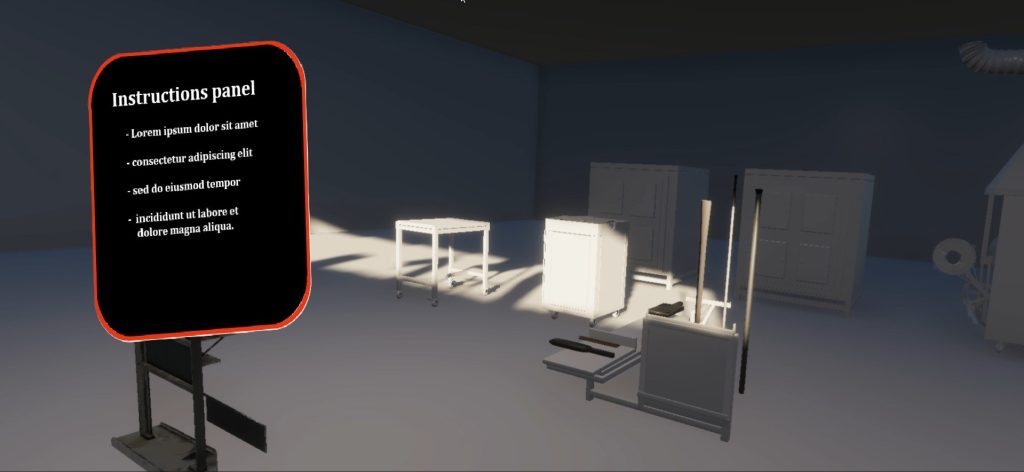
Glass Blowing Virtual Reality Workshop developed by Khora.
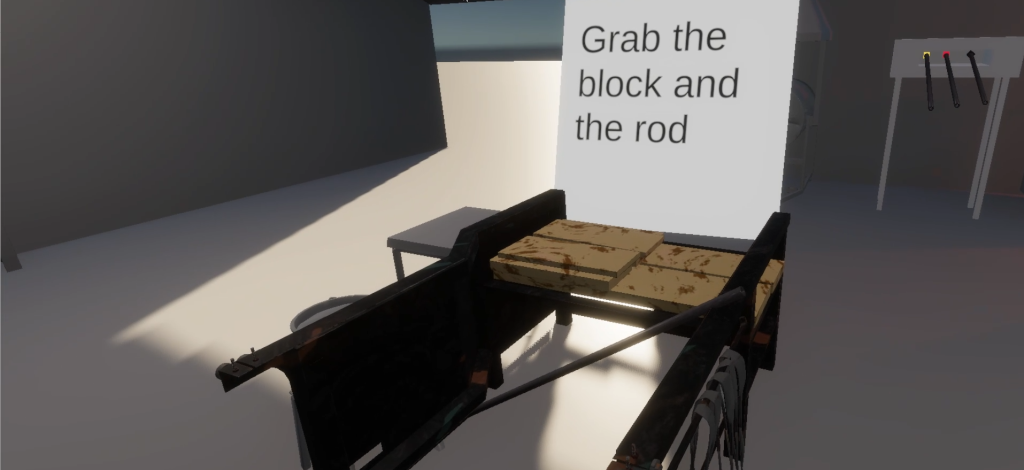
Glass Blowing Virtual Reality Workshop developed by Khora.
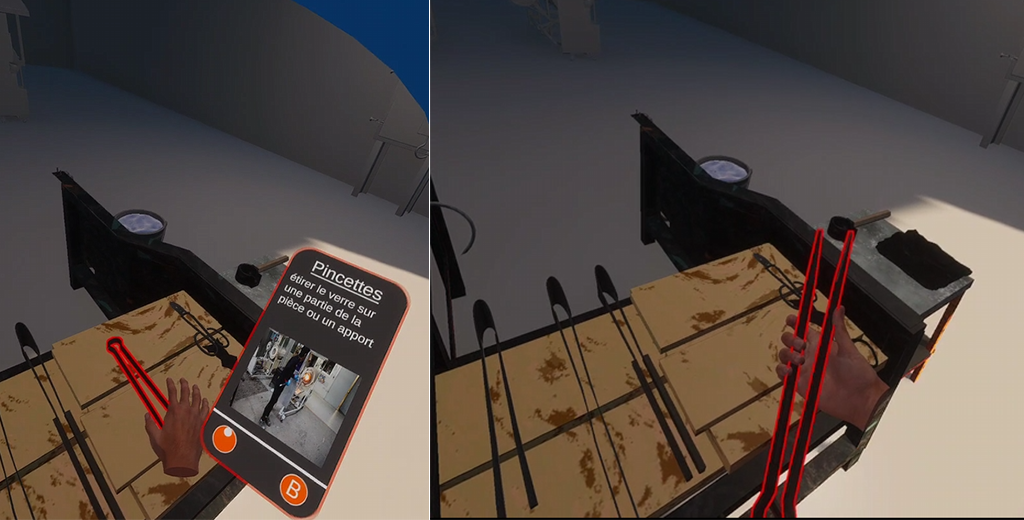
Glass Blowing Virtual Reality Workshop developed by Khora.
Interactive Tools and Hand Poses
A crucial aspect of the simulator’s design is its focus on the realistic representation of glassblowing tools and hand poses. Each tool in the simulator is associated with a specific hand position that is carefully tracked by the VR controllers.
Tools Featured in the Simulator:
Jacks: Used for shaping, cutting, and centering glass.
Blowpipe: A fundamental tool for gathering, shaping, and blowing the glass.
Tweezers, Shears, and other hand tools: Each tool is modeled with two states—open and closed—that can be switched with a button press on the controller.
Blocks and Molds: Used for shaping the glass, these tools provide users with the opportunity to practice various techniques such as blocking and mold-blowing.
Hand poses are essential for ensuring that the tools are used correctly. The simulator uses specific right-hand positions for each tool, which can be toggled between open and closed states. The feedback system in the VR experience ensures that users can fine-tune their gestures and tool usage, mimicking real-world glassblowing actions.
Waiting Room and Controller Setup
Before engaging with the learning scenarios, users first enter a “waiting room” where they can familiarize themselves with the VR controllers and the virtual environment. This simple yet effective space allows users to test their controllers and adjust settings before starting their glassblowing practice.
The controllers themselves are designed for easy interaction:
Left Controller: Used for teleportation, allowing users to move freely around the virtual studio.
Right Controller: Controls tool information displays, starts animations, and facilitates the gripping and manipulation of virtual tools.
Realistic Simulations and Physics
To enhance the learning experience, the simulator includes realistic physics that govern the interaction of tools with glass. For example, when the user picks up the blowpipe, the simulator applies physics to simulate the weight and handling behavior of the blowpipe, giving learners a realistic sense of how it moves and responds during glassblowing.
Additionally, the virtual environment mimics real-world studio settings, with different areas highlighted for various stages of the glassblowing process. From the furnace to the annealing station, users can practice glassblowing in different “zones” that represent essential stages such as blocking, shaping, and reheating the glass.
Sustainability and Accessibility
One of the major advantages of the VR Glassblowing Simulator is its ability to reduce the environmental impact of traditional glassblowing. By allowing users to practice without the need for raw materials or high-energy furnaces, the simulator offers a more sustainable method of learning the craft.
Furthermore, the VR simulator opens up access to glassblowing education to individuals who might not have access to physical workshops or glass studios. Whether in remote locations or regions with limited resources, learners can engage with the craft and develop their skills without the need for expensive equipment or specialized tools.
The Future of Craft Education
The VR Glassblowing Simulator represents the future of craft education—an innovative fusion of tradition and technology. As VR technology advances, the simulator could evolve to include more complex tools, advanced techniques, and deeper levels of interaction. The ability to incorporate artificial intelligence for personalized feedback or even biometric tracking for performance analysis could further enhance the learning experience.
In conclusion, the CRAFT project’s VR Glassblowing Simulator is a powerful tool for preserving the art of glassblowing and making it more accessible to a global audience. By combining realistic simulations, interactive tools, and hands-on learning, the project has created an immersive educational experience that could reshape the way traditional crafts are taught and learned in the future.
