
Topics for discussion:
- Can tradition survive modern pressures?
- What role can the public play on supporting local artisans?
- What can traditional crafts teach us today?
- Is silversmithing matter today and why?
In 2013, the art of silversmithing in Epirus was inscribed into the Greek National Inventory of Intangible Cultural Heritage (iCH), a milestone recognizing the tradition as a vital element of Greece’s living heritage. This inscription, led by the Directorate of Modern Cultural Heritage of the Hellenic Ministry of Culture, brought national attention to a craft that continues to reflect the ingenuity, resilience, and identity of the Epirote people.
Historical Overview
Silversmithing in Epirus has roots dating back to the 15th century and flourished particularly in the 18th and 19th centuries. During this golden age, artisans in the region became renowned for their technical skill and distinctive aesthetic, crafting both everyday items and ornate ceremonial objects.
Factors contributing to the development of this tradition included the region’s relative isolation, its proximity to silver resources, and its place at the crossroads of Balkan and Ottoman cultural influences. The result was a refined, regionally specific form of silver artistry with deep social and symbolic resonance.
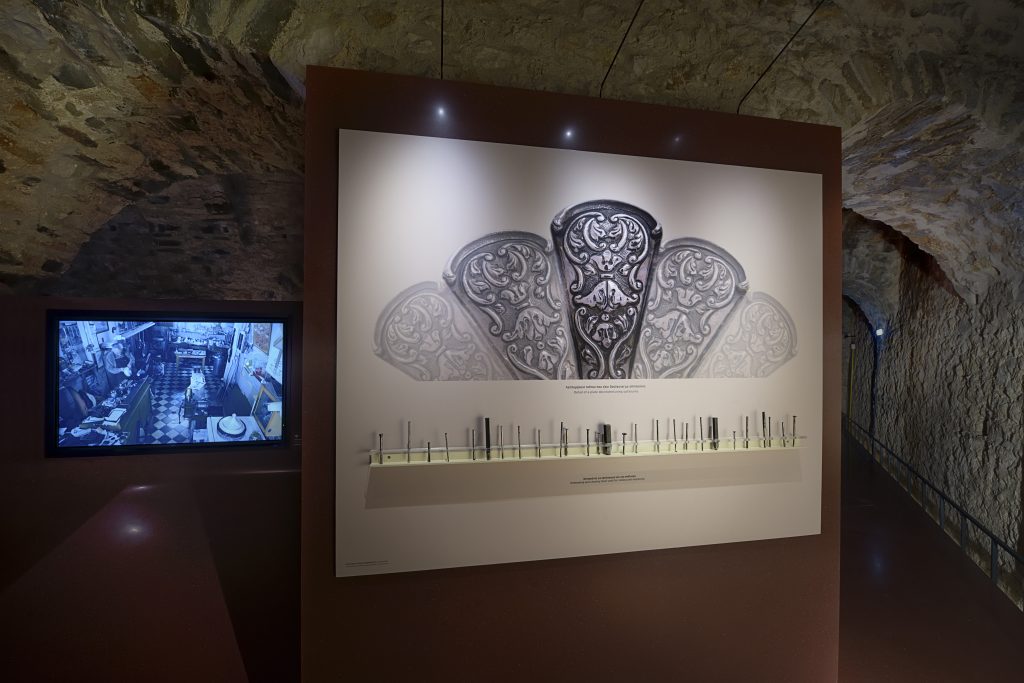
GR PIOP M10_0014. Silver buckle, late 19th century and GR PIOP M10_0018. Roka (silver gilt pistol), period: 1780-1820
Centers of Craftsmanship
The most prominent silversmithing centers in Epirus are:
- Ioannina – the capital and enduring heart of the craft, where workshops continue to operate today.
- Kalarrytes and Syrrako – mountainous villages famous for their itinerant silversmiths, who traveled across Europe.
- Metsovo – another stronghold, where craftsmanship was passed down through family lineages.
Each of these communities contributed uniquely to the evolution of the art, while maintaining shared values of precision, beauty, and symbolism.
Techniques, Tools, and Motifs
Traditional silversmithing techniques include:
- Filigree – delicate wirework creating lace-like patterns.
- Repoussé – hammering from the reverse side to create raised designs.
- Engraving and Casting – for detail and structure.
Common tools include anvils, hammers, burins, blowtorches, and molds — many of which are handcrafted themselves.
Design motifs often include natural elements (flowers, vines, birds), religious symbols (crosses, icons), and abstract geometric patterns, each bearing cultural meaning and stylistic depth.
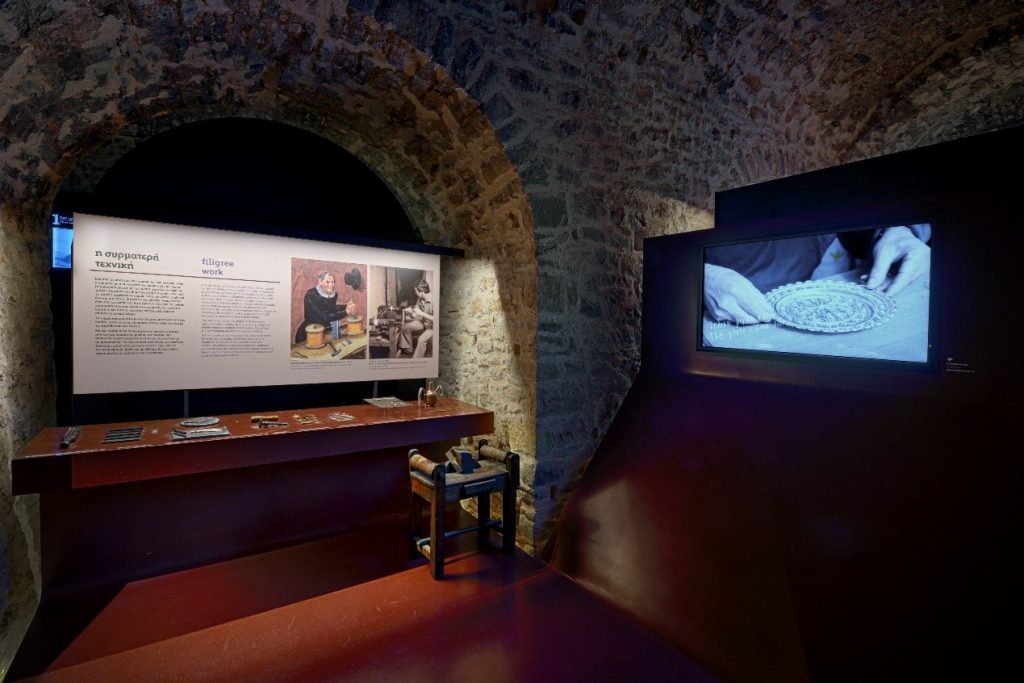
11.GR-PIOP-111032_VAR4802. View of the permanent exhibition-The filigree technique | © PIOP, V. Karavassiloglou
Cultural and Social Importance
Silver objects in Epirus are more than beautiful creations; they are embedded in the region’s rituals and identities. Jewelry, belt buckles, sword hilts, religious vessels, and household items mark life milestones such as weddings, baptisms, and religious ceremonies. Historically, silverwork also contributed significantly to local economies, especially in isolated mountain communities.
Transmission of Knowledge
Traditionally, the craft was passed down through family apprenticeships and workshops, where younger generations learned by watching and doing under the guidance of master artisans.
Today, knowledge transmission is also supported by formal institutions, notably the Silversmithing Museum of Ioannina, created by the Piraeus Bank Group Cultural Foundation. The museum offers:
- Permanent and temporary exhibitions
- Tool and technique demonstrations
- Educational programs for schools and the public
- Collaborations with contemporary artists and designers
These efforts ensure that both the public and aspiring artisans gain access to a living tradition.
Safeguarding Efforts and Challenges
Since its inscription in 2013, silversmithing in Epirus has benefitted from increased visibility and institutional support. Local and national actors — including museums, cultural foundations, municipal authorities, and educational institutions — collaborate to promote the craft through festivals, training programs, and exhibitions.
However, the tradition faces modern challenges:
- Economic pressure on small workshops
- Rising material costs
- Declining number of apprentices
- Competition from mass-produced goods
To meet these challenges, safeguarding strategies must include sustainable tourism, cultural education, financial incentives for artisans, and integration of silversmithing into broader creative industries.
Looking Forward
Silversmithing in Epirus is a rare example of a tradition that has retained its integrity while adapting to new realities. It is not simply a relic of the past, but a vibrant expression of regional identity, artistry, and resilience.
By continuing to value craftsmanship, invest in training, and support the communities that sustain it, we can ensure that the silver threads of this remarkable tradition remain unbroken — linking past, present, and future with elegance and meaning.
For more information, visit the Silversmithing Museum of Ioannina (www.piop.gr) or the official website of the Greek Intangible Cultural Heritage Inventory.