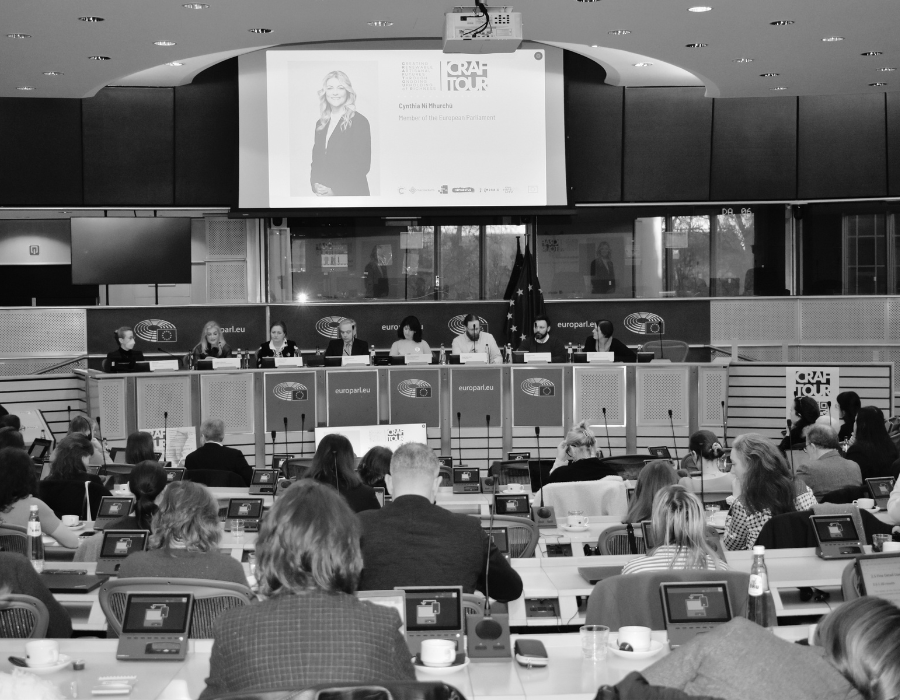
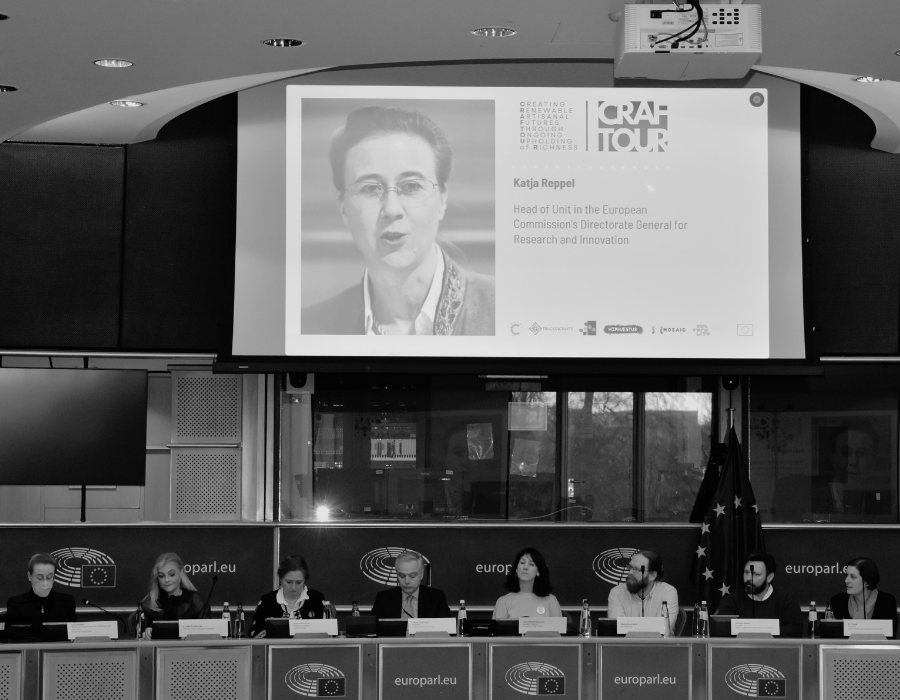
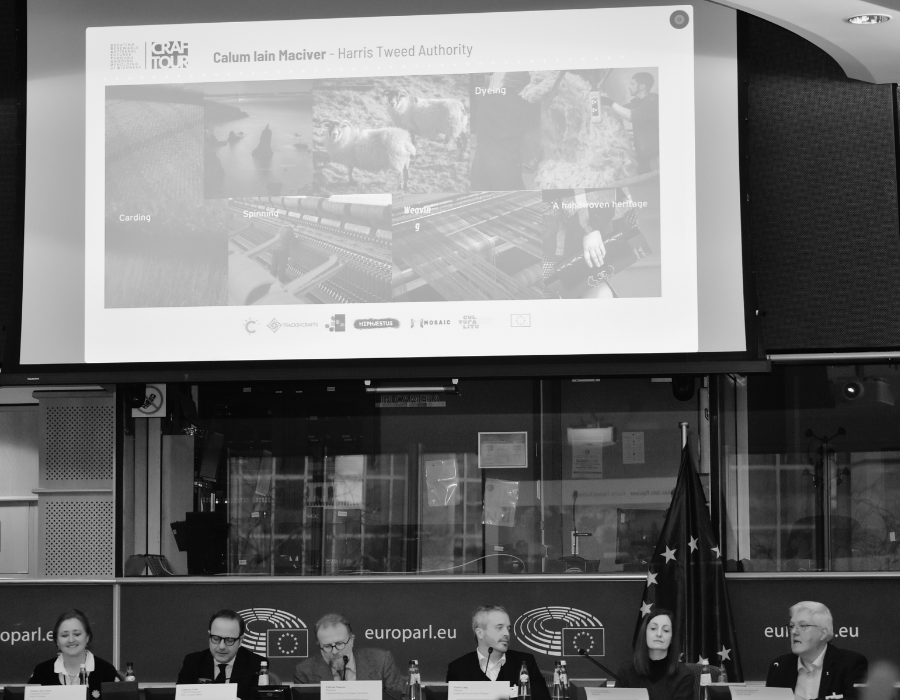
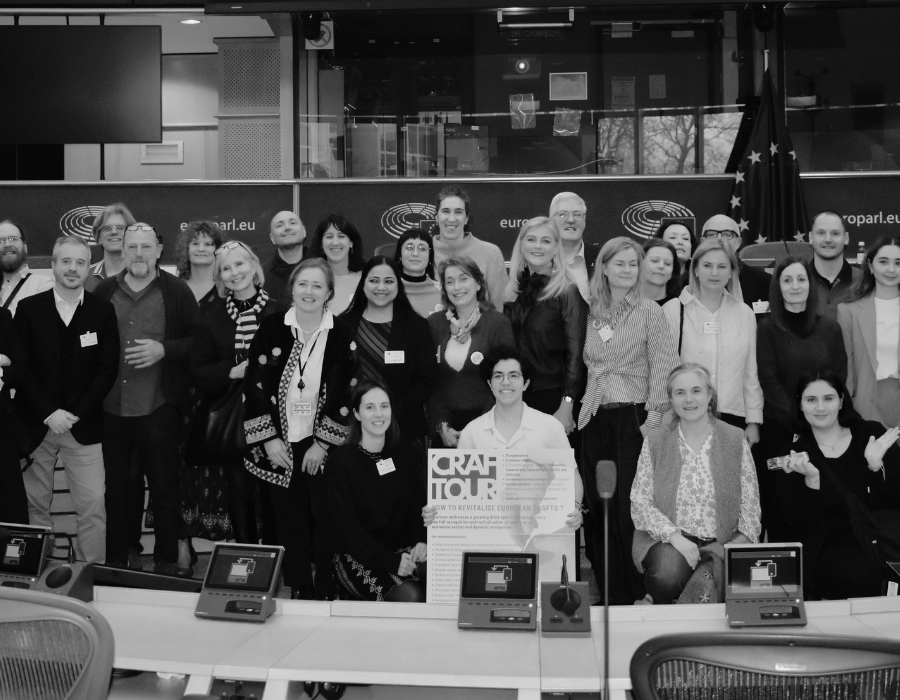
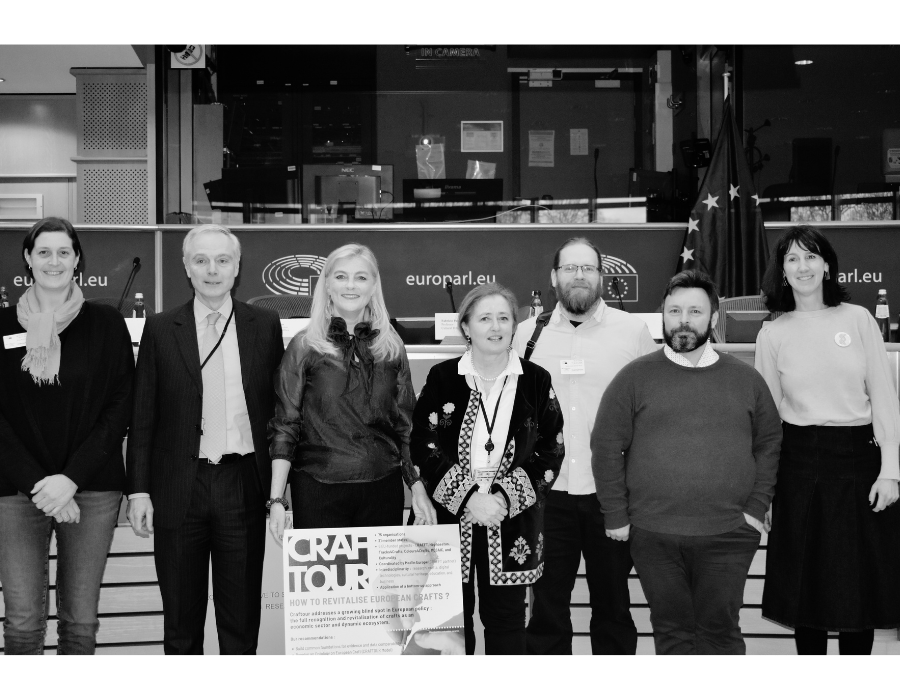
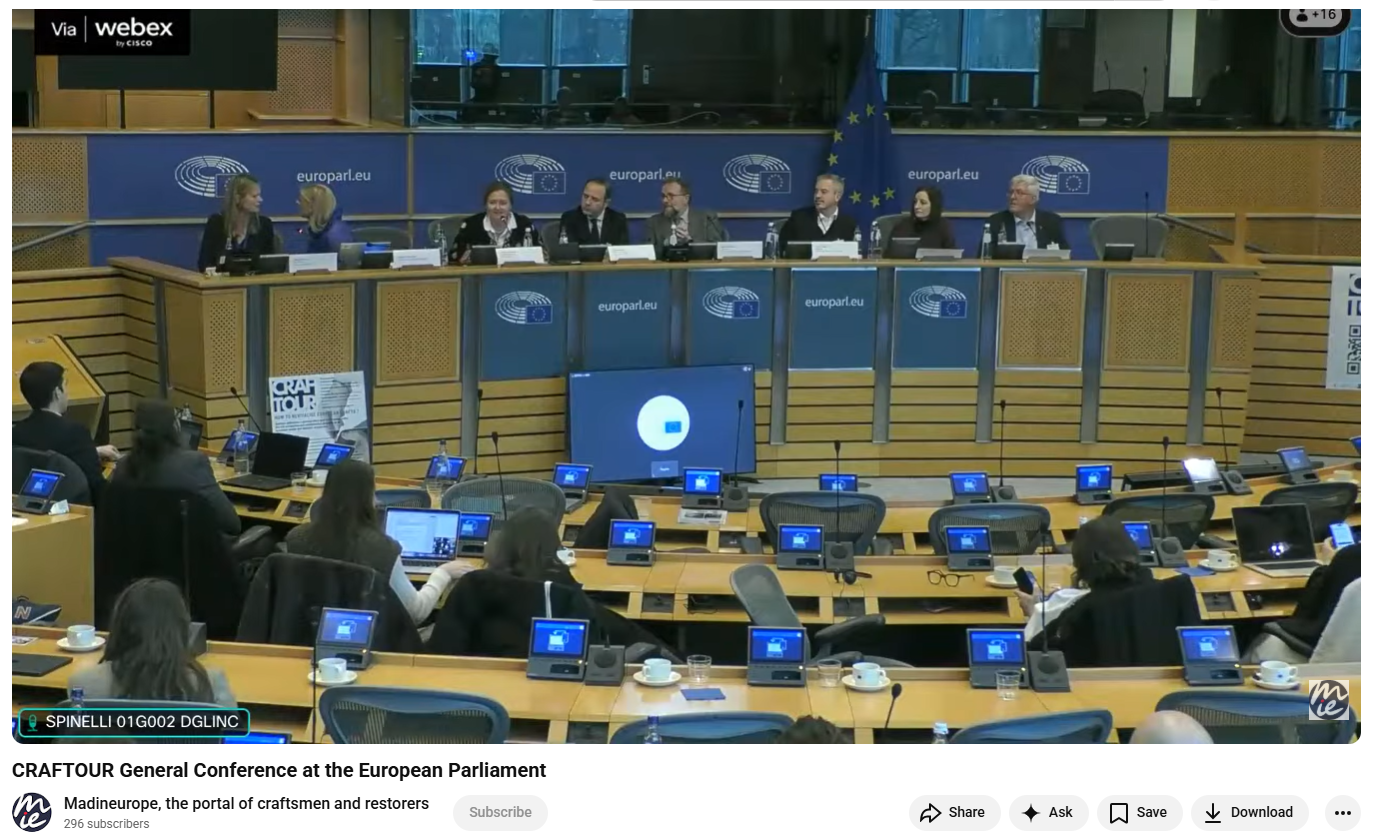
On 30 January 2026, the European Parliament, under the patronage of Cynthia Ní Mhurchú and opened by Mad’in Europe (CRAFTOUR coordinator) together with representatives from the European Commission and the Research Executive Agency, hosted the CRAFTOUR General Conference. The event presented the first consolidated policy evidence emerging from the CRAFTOUR initiative and engaged European policymakers in a structured dialogue on the future of the crafts sector. Bringing together crafts professionals, educators, researchers, heritage stakeholders and representatives of European institutions, the conference demonstrated the strategic relevance of crafts for cultural heritage, skills development, sustainability, territorial development and European competitiveness.
The policy roundtable with the European Commission (10 December 2025), where initial recommendations were presented
A scientific conference in Antwerp (29 January 2026), feeding into a forthcoming Springer collective publication
The CRAFTOUR General Conference aimed to:
Present the first consolidated policy evidence emerging from the CRAFTOUR initiative
Demonstrate the strategic relevance of crafts for European cultural, social, and economic policies
Engage policymakers through bottom-up testimony from crafts professionals, educators, researchers, and heritage stakeholders
To effectively communicate complex Policy Recommendations to the conference audience, these insights were transformed into two visually engaging storytelling videos. Each video focused on a specific set of recommendations.
Structure
The General Conference was organised around two panels, with strong participation from crafts professionals, ensuring direct field-based evidence.
Panel 1 – Crafts as a Strategic Cross-Sector Ecosystem The panel demonstrated how crafts are structurally interconnected with:
Traditional and sustainable building
Historic monuments and conservation
Fashion, luxury, and interior design
Music, instrument making, and performing arts
Tourism and local development
Key message:Crafts are not a niche activity but a critical infrastructure supporting multiple European value chains.
Panel 2 – Crafts and European Societal Impact This panel focused on:
Tangible and intangible heritage safeguarding
Territorial identity, cultural diversity, and social cohesion
Employment, entrepreneurship, and competitiveness
Key message: Crafts generate long-term value, particularly in rural and heritage-rich areas, but this value remains largely invisible to policymakers due to lack of comparable data.
Following the CRAFTOUR General Conference, a podcast interview was recorded with Cynthia Ní Mhurchú, Member of the European Parliament, focusing on the realities, challenges and future of the crafts sector in Europe. The discussion featured invited speakers from the CRAFTOUR General Conference, including Madina Benvenuti – coordinator of the CRAFTOUR Initiative and Managing Director of Mad’in Europe, Audrey Aubard – Secretary General of FFIGIA and Hugh Roche Kelly – Independent Woodturner and Head of Workshop at Sonian Brussels. The interview was conducted and moderated by Emily Keane, whose questions helped deepen the conversation on the role of crafts within European frameworks, ranging from competitiveness and the green transition to innovation and heritage.