Exploring crafts through research, practice and policy
On 29 January 2026, the CRAFTOUR Scientific Conference brought together researchers, academics, practitioners and institutional stakeholders at the University of Antwerp for a full day of reflection and exchange on the future of crafts in Europe.
Hosted in a hybrid format and gathering nearly 180 participants on site and online, the conference marked a key moment in the CRAFTOUR journey: a space dedicated to deepening research-based perspectives on crafts, while opening them to broader societal, technological and policy debates.
From policy dialogue to academic depth
Following the CRAFTOUR Policy Round Table held in December 2025 at the European Commission, the Scientific Conference shifted the focus toward academic research and critical analysis, building on the core pillars of the CRAFTOUR initiative.
The event provided a platform to discuss ongoing and emerging research that will result in the CRAFTOUR academic book publication, which will collect contributions from the initiative’s partners. The publication is grounded in interdisciplinary approaches spanning history, anthropology, law, design, digital technologies, education, and cultural policy.
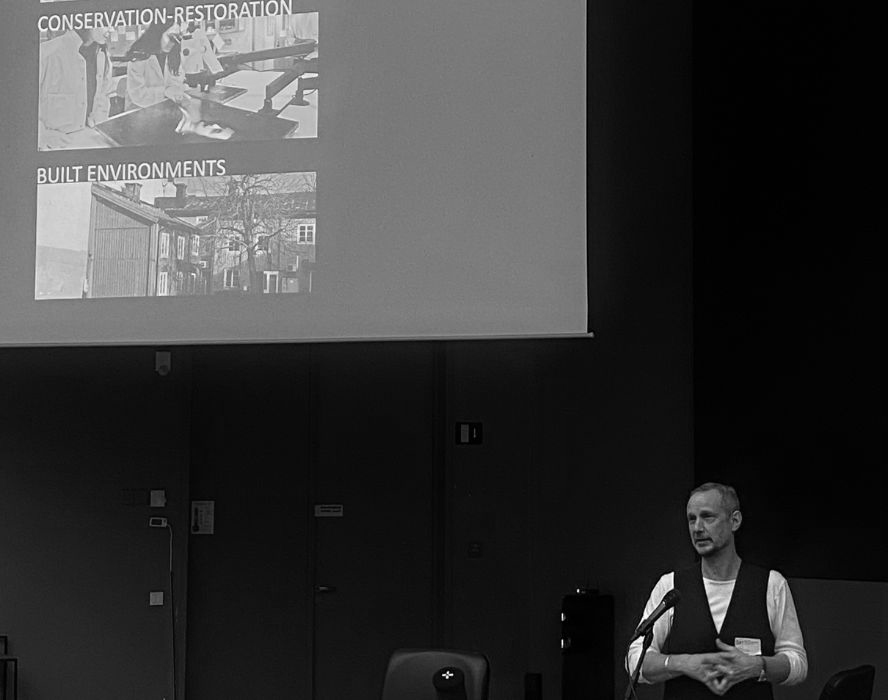
Professor Gunnar Almevik, Professor in Conservation at the University of Gothenburg.
Opening the debate
The conference opened with an introduction to the objectives of the event and the broader CRAFTOUR framework, followed by a keynote lecture by Professor Gunnar Almevik, Professor in Conservation at the University of Gothenburg.
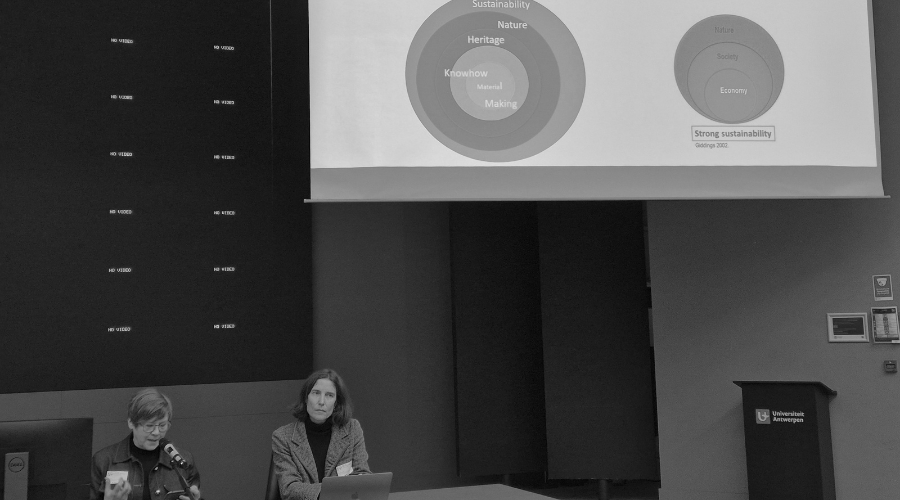
The keynote set the tone for the day, framing craftsmanship as a living field of knowledge shaped by long temporalities, material practices and contemporary transformations. Highlighting the importance of research in understanding how crafts evolve, persist and adapt through time.
Three thematic roundtables
The programme unfolded through three thematic roundtables, each addressing a key dimension of crafts in transition.
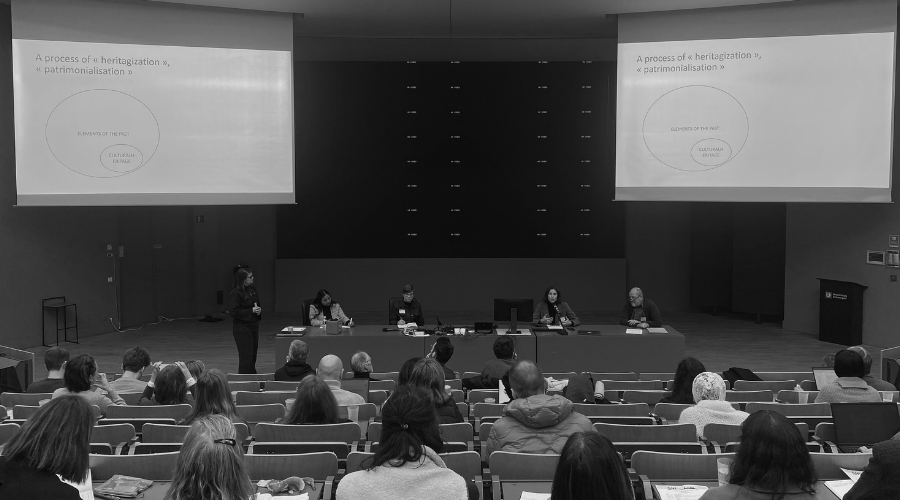
Roundtable 1 : Histories of value(s) and the governance of culture
The first roundtable explored how crafts are defined, valued and governed in European contexts. Discussions examined the construction of social, economic, ecological and cultural values, the political implications of “mapping craft”, and the evolving notion of authenticity, including consumer perceptions and the role of Geographical Indications.
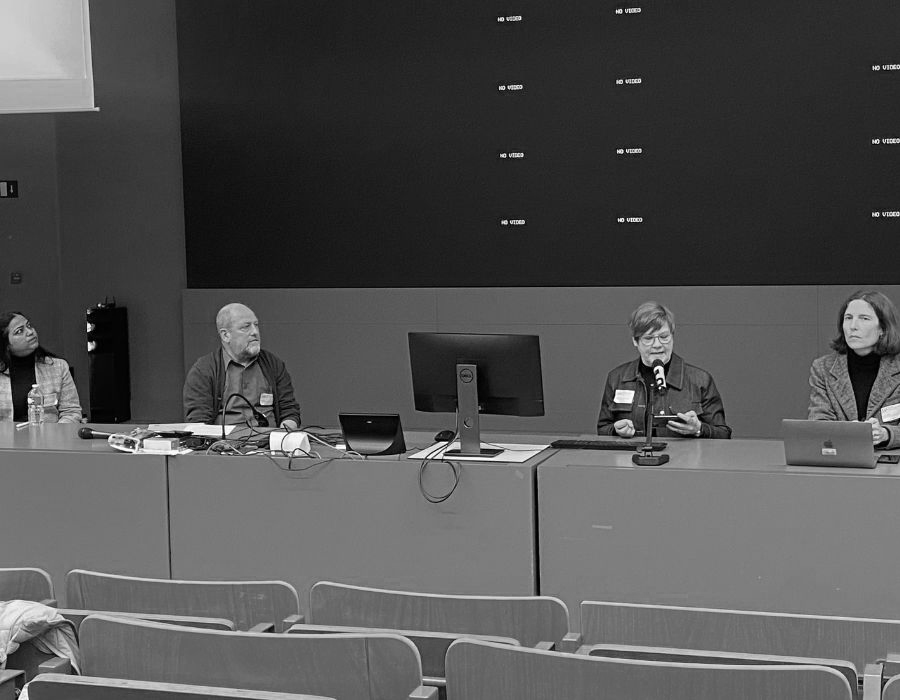
Speakers :Vishv Priya Kohli, Associate Professor of Law & Management at the Department of Business Humanities and Law at Copenhagen Business School, Denmark.Riikka Räisänen, Professor of Craft Science and Craft Pedagogy, University of Helsinki, Finland. Bert De Munck, Professor at the History Department at the University of Antwerp, Belgium. Francesca Cominelli,Associate Professor at the University of Paris 1 Panthéon-Sorbonne and Vice-Director of EIREST, France.
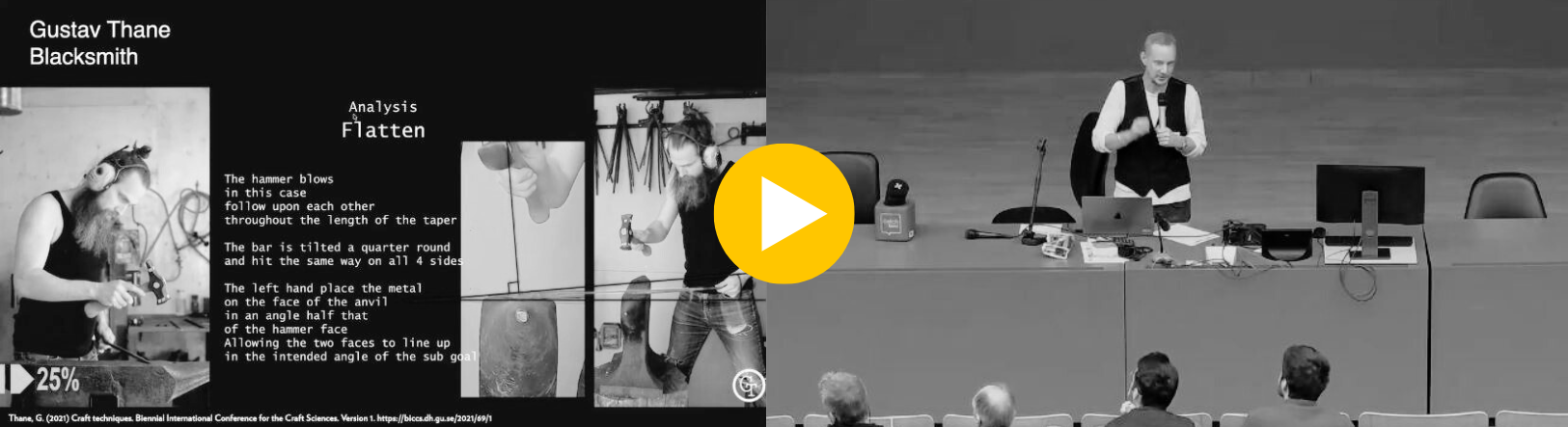
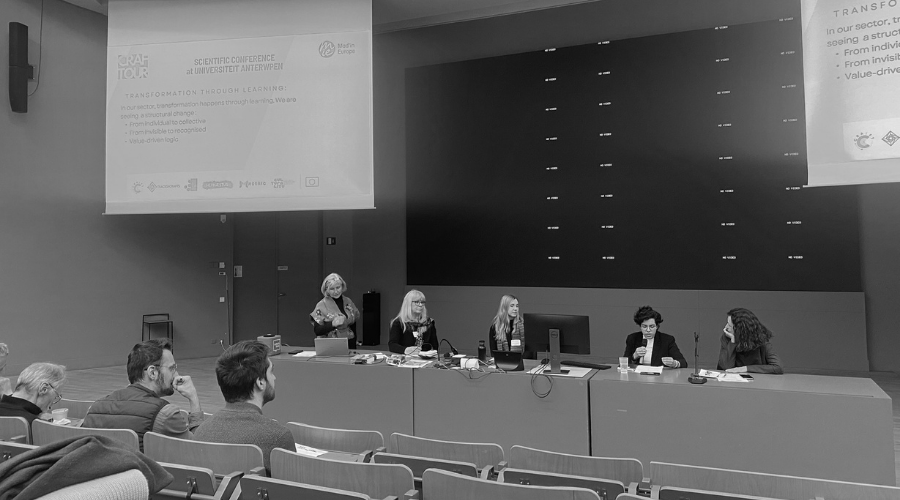
Roundtable 1 speakers
Roundtable 2 : Digital imaginaries and crafts in transition
The second roundtable focused on the growing role of digital technologies across the craft ecosystem. Participants discussed how tools such as digital fabrication, data infrastructures and artificial intelligence interact with traditional practices, reshape learning processes, and challenge or reinforce ideas of authenticity, identity and value.
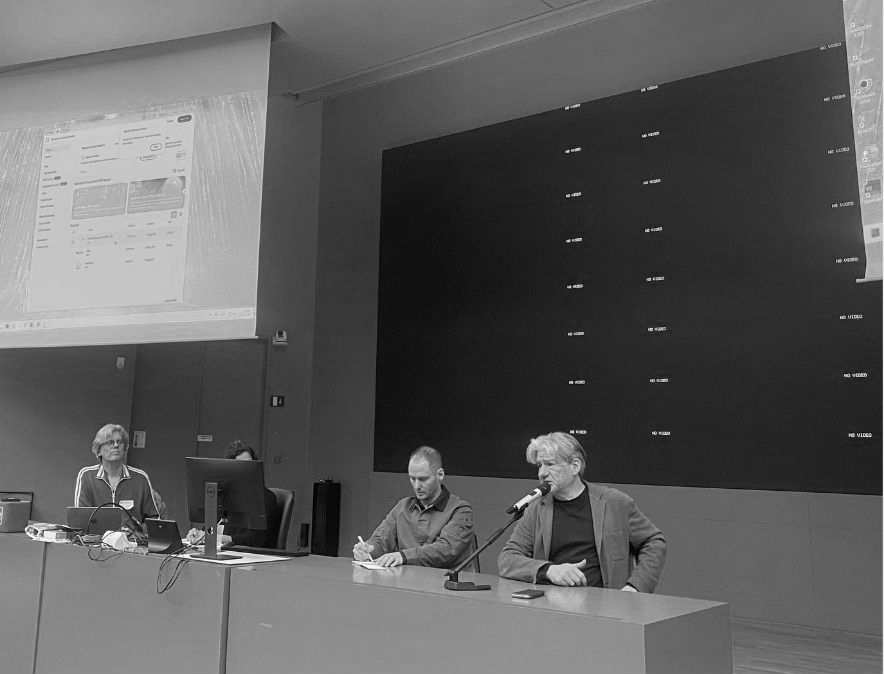
Speakers : Theodore Harper-Davis, PhD , Artist and Senior Lecturer at HDK-Valand, University of Gothenburg, Sweden. Pammi Sinha, PhD, Professor of Fashion Management University of Leeds, School of Design, United Kingdom. Sofia Soledad Duarte, Post-doctoral Research Fellow, designer, and lecturer at Politecnico di Milano, Italy. Dr Xenophon Zabulis, Research Director at the Institute of Computer Science – Foundation for Research and Technology, Hellas, Greece.
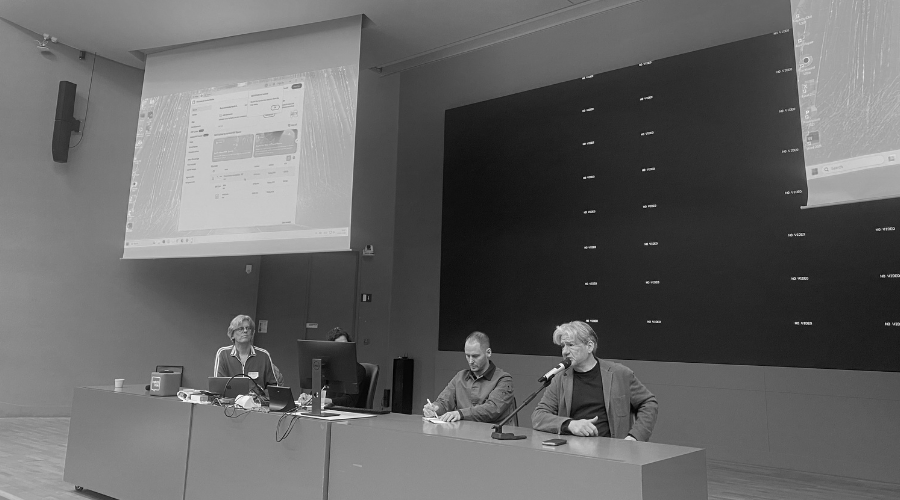
Roundtable 2 speakers
Roundtable 3 : Organisational transformation and resilience
The final roundtable adopted a holistic perspective on crafts, addressing organisational change, sustainability and resilience. Discussions highlighted ecological practices, experimental methodologies and innovative business models, while also confronting contradictions and practical barriers faced by craft practitioners in navigating environmental and economic transitions.
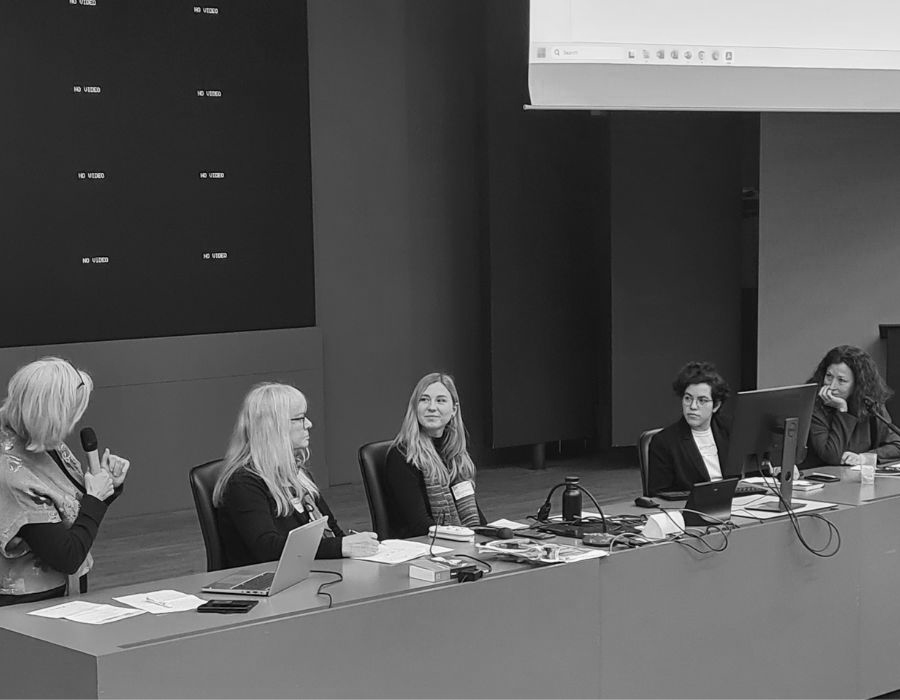
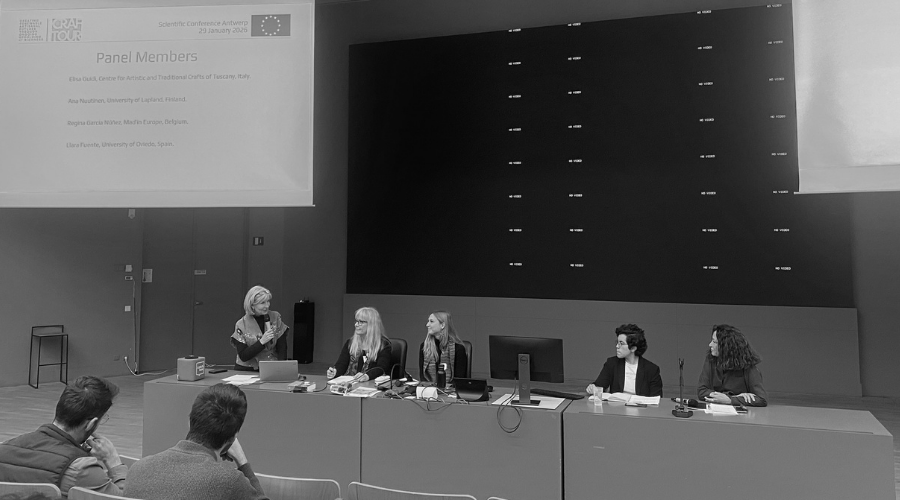
Speakers : Elisa Guidi, General Coordinator of Projects at Artex – Centre for Artistic and Traditional Crafts of Tuscany, Italy. Ana Nuutinen, PhD, Professor of Fashion and Clothing, Team Leader, University of Lapland, Faculty of Art and Design, Finland. Regina Garcia Núñez, Project Manager at Mad’in Europe, specialising in crafts, built heritage, and the safeguarding of intangible cultural heritage, Belgium. Llara Fuente, Art Historian and Severo Ochoa Predoctoral Fellow in the Department of Art History and Musicology at the University of Oviedo, Spain.
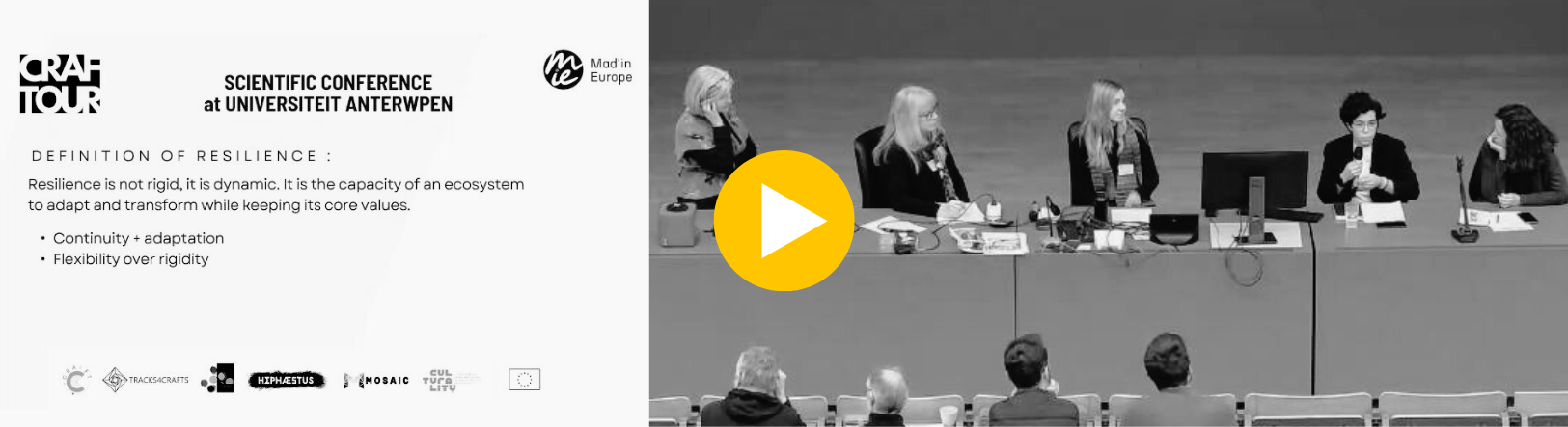
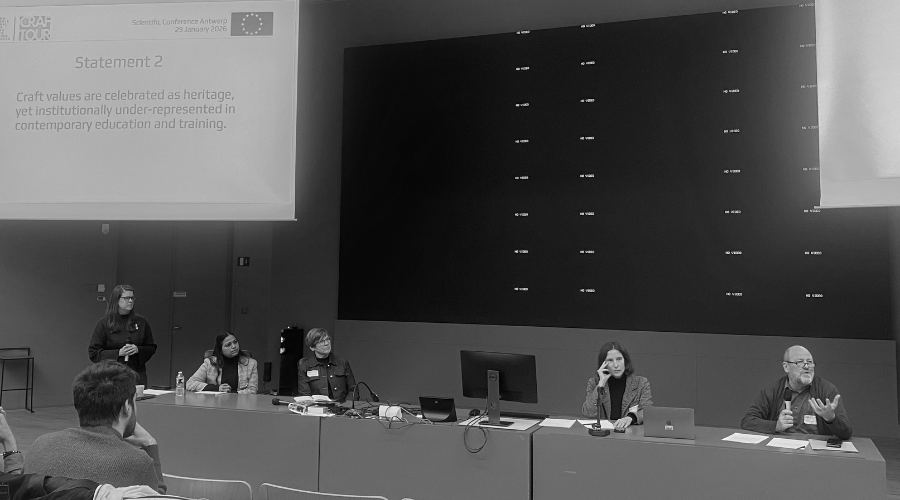
Roundtable 3 speakers
Across the three sessions, 15 speakers from universities, research centres and craft organisations contributed diverse perspectives rooted in both theory and practice.
The Scientific Conference represents a key step in the development of CRAFTOUR’s collective research outputs, including academic publications and shared analytical frameworks that inform policy dialogue and public debate.
Its conclusions and insights directly feed into the next milestone of the initiative: the CRAFTOUR General Conference, held the following day at the European Parliament, where research findings are brought into conversation with European policymakers and institutions.